
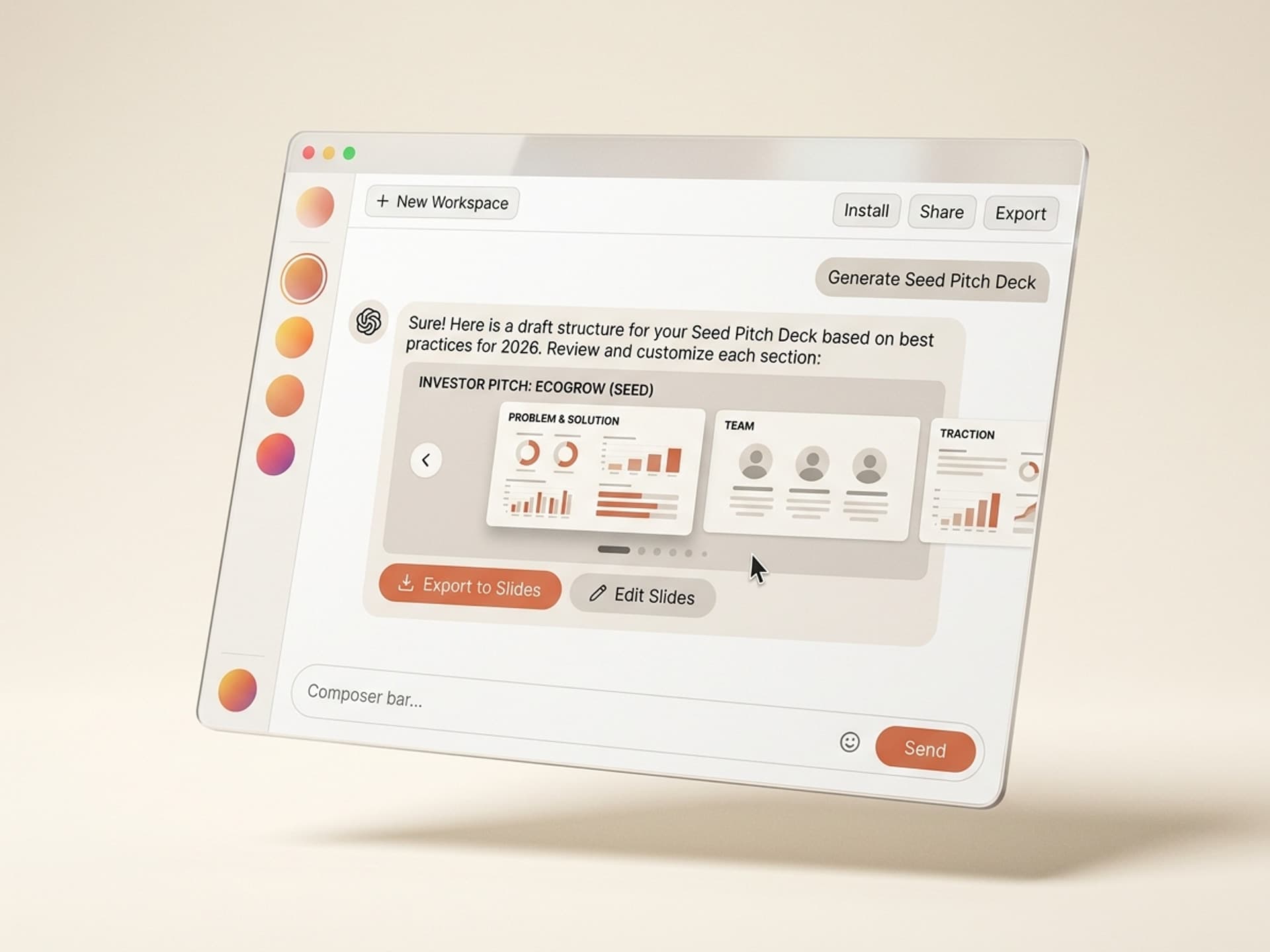

Browse hundreds of ready-made skills for Claude, Cursor, and more.
The Best AI Skills for Pitch Decks: What Changed in 2026
The best AI skills for pitch decks in 2026 cut the work from 14 hours to under 30 minutes, and they ship with investor-grade layouts built by designers who have placed decks at Sequoia, a16z, and Y Combinator. The bar moved. A generic template no longer clears it, and a generic ChatGPT deck definitely does not.
Founders who use an AI skill instead of starting from a blank deck typically save 12 - 13 hours per v1 iteration. That time compounds across the 4 - 6 decks a pre-seed or seed founder writes before the first term sheet. For Series A founders, the same compounding shows up across board decks, QBRs, and partnership pitches.
This guide covers the seven pitch deck skills we recommend on Vibe Skills in 2026, what each one is best at, and how to ship v1 in 30 minutes.
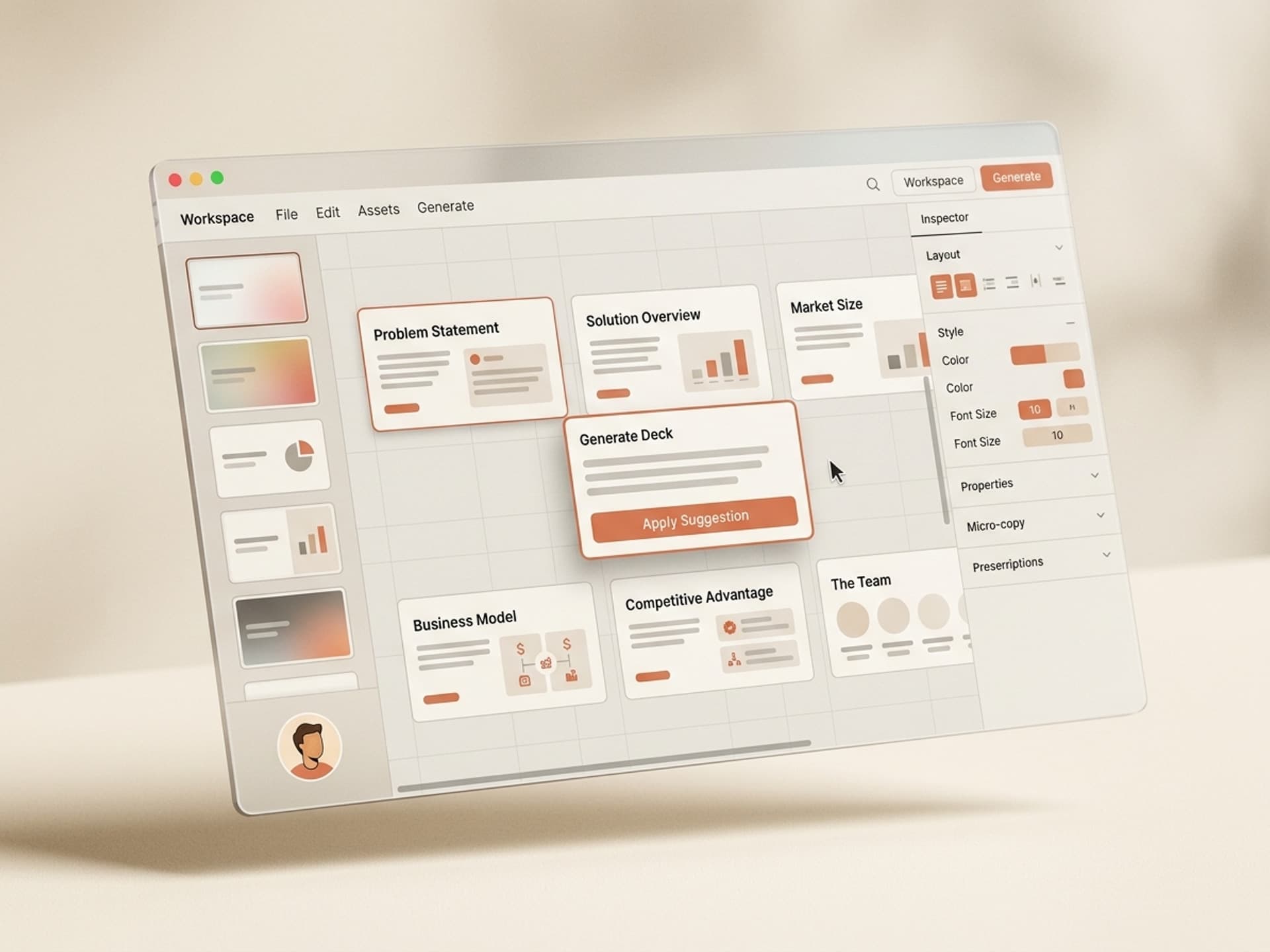
Browse hundreds of ready-made skills for Claude, Cursor, and more.
Why a Pitch Deck Decides Whether You Get the Meeting
A VC spends 3 minutes 44 seconds on an average pitch deck according to DocSend's 2024 founder-deck study. That is not a typo. You have 224 seconds to hook, prove traction, and make the investor forward the deck to a partner.
In that window three things have to happen:
- The problem has to land in slide 2. If it doesn't, the reader assumes you don't know your market.
- Traction has to show up by slide 5. Decks without traction stop getting opened after the first forward.
- The ask has to be the closing slide. A vague ask is a no.
Most founders write decks that miss all three. Not because they don't know their business - because designing 10 slides that land in sequence is a separate skill from running a startup. An AI pitch deck skill already knows the sequence; your job is the content.
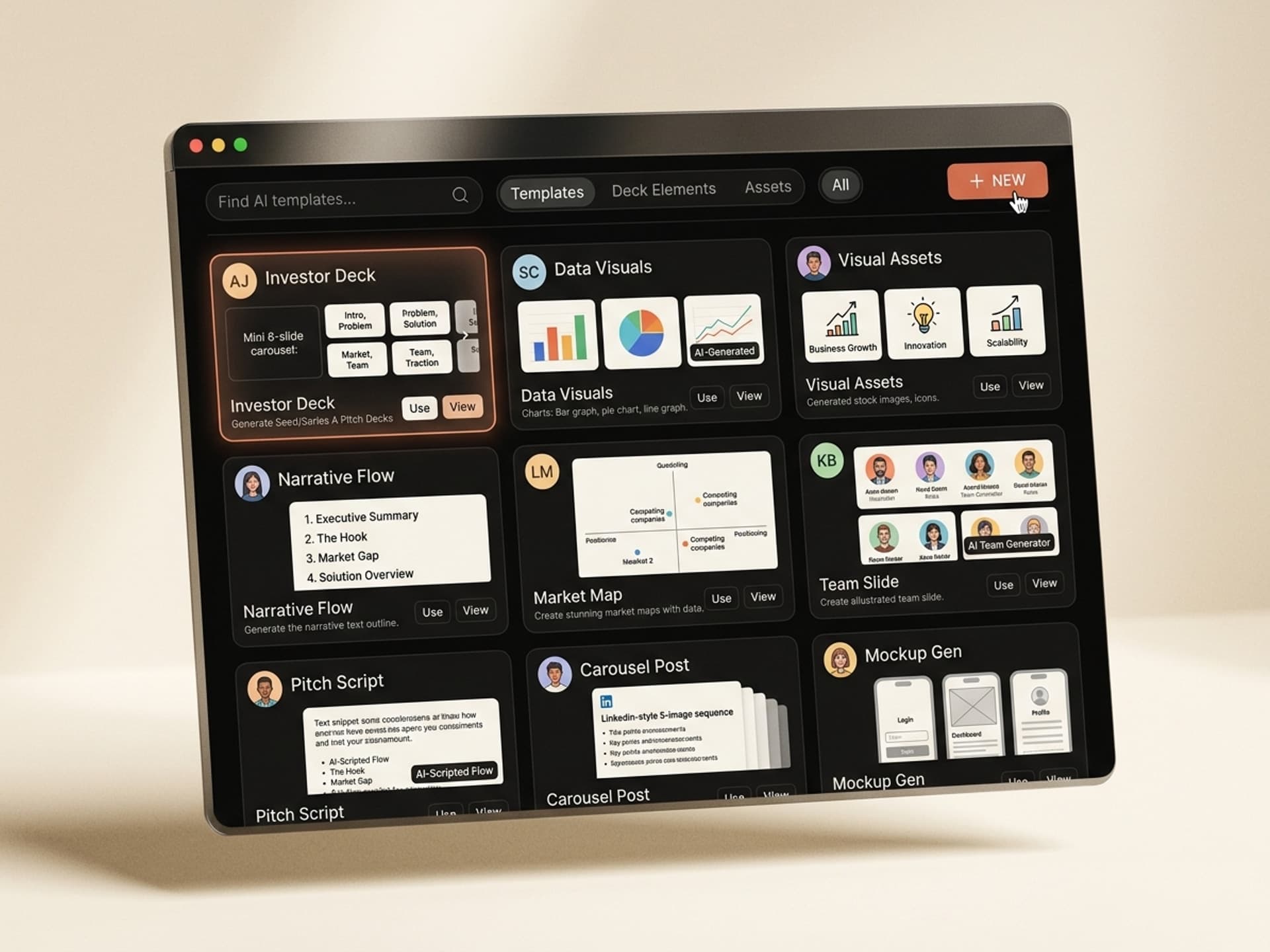
Browse hundreds of ready-made skills for Claude, Cursor, and more.
The 5 Types of Decks Most Founders Need
Pitch decks are not one artifact. Most founders write 5 different decks across the fundraising and post-raise journey:
| Deck type | Audience | Typical length | Best AI skill |
|---|---|---|---|
| Pre-seed / seed deck | Angels, pre-seed funds | 10 - 12 slides | Investor Pitch Deck Generator |
| Series A deck | Top-tier VCs | 14 - 18 slides | Series A Pitch Deck |
| Sales deck | Prospective customers | 12 - 15 slides | Sales Demo Deck Builder |
| Board deck | Existing investors | 18 - 25 slides | Board Meeting Deck |
| QBR deck | Customers, post-sale | 10 - 14 slides | Quarterly Business Review Deck |
Having one deck to show everyone doesn't work. Investors want traction density. Customers want solution density. Board members want strategic density. AI skills on Vibe Skills solve this by being purpose-built per audience, not "one pitch deck template with variants".
How AI Skills Actually Build a Pitch Deck
An AI pitch deck skill runs in five steps: you paste your inputs, the skill picks the sequence, fills the slides, lays out the visuals, and exports to Figma or Google Slides. The final file is editable and brand-consistent.
Here is the exact flow for a pitch deck skill on Vibe Skills:
Step 1: Pick the skill on Vibe Skills
Browse the Presentations category and pick the skill that matches your stage. A pre-seed founder picks Investor Pitch Deck Generator. A Series A founder picks Series A Pitch Deck.
Step 2: Paste the core inputs
Every pitch deck skill asks for the same core inputs:
- Company name + one-sentence pitch
- Problem statement (1 - 2 sentences)
- Solution statement (1 - 2 sentences)
- Traction numbers (revenue, users, growth rate)
- Market size (TAM, SAM, SOM)
- Team (founders, roles, prior outcomes)
- Ask (raising $X for Y months of runway)
If you don't have a number, the skill flags it and suggests what to put in its place.
Step 3: The skill generates v1
The skill runs the inputs through Claude or GPT (the skill author picks the right model) and produces 10 - 18 slides with:
- Slide-by-slide narrative that opens with the problem and closes with the ask
- Investor-grade typography and color system
- Layouts for each slide type (traction chart, team grid, competitive moat, use of funds pie chart)
- Editor-ready file in Figma, PowerPoint, or Google Slides
v1 takes 90 seconds to 4 minutes depending on the model the skill uses.
Step 4: Edit the 10 - 20% that matters
Most founders change the financials slide, the team slide, and one visual accent. The rest ships as-is. The output is already investor-ready, not a first draft.
Step 5: Export and send
Export to your target format. Most founders use Google Slides so they can track link opens via DocSend.
The 7 Must-Have Pitch Deck Skills on Vibe Skills
These are the pitch deck skills we recommend in 2026. All of them are on Vibe Skills under the Presentations category.
1. Investor Pitch Deck Generator (by DeckCraft)
Best for pre-seed and seed founders. 10 - 12 slides: problem, solution, market, traction, team, ask, roadmap. Clean minimal style that reads like a Sequoia-backed company. Exports to Figma, PowerPoint, and Google Slides.
2. Series A Pitch Deck (by DeckCraft)
Best for Series A founders. 14 - 18 slides with heavier focus on traction density: cohort retention, unit economics, growth model, competitive moat. Tested with 50+ VCs before publication.
3. Seed Round Pitch Deck (by SlideStudio)
Best for pre-revenue founders. Investor-grade layout for teams with vision but limited numbers. Strong problem and wedge framing, light on the traction demand.
4. Sales Demo Deck Builder (by DeckCraft)
Best for B2B founder-led sales. 12 - 15 slides: value prop, customer pain, product demo flow, case studies, pricing comparison, close. Stops reading like fundraising and starts reading like a buyer's journey.
5. Board Meeting Deck (by DeckCraft)
Best for post-seed founders with a formal board. 18 - 25 slides: quarterly update, financials, strategic bets, risks, asks. Dense, scannable, built for directors who read the deck 20 minutes before the meeting.
6. Quarterly Business Review Deck (by SlideStudio)
Best for post-sale customer QBRs. Wins, metrics, roadmap, asks. Pulls customer data into an exec-ready layout that account managers can ship without involving design.
7. All-Hands Company Update Deck (by DeckCraft)
Best for monthly all-hands. Highlights, wins, metrics, team shout-outs, upcoming priorities. Not an investor deck, but it is the deck founders write most often after a successful raise.
Browse the full Presentations category on Vibe Skills →
AI Skill vs Designer vs Template vs From-Scratch: The Real Comparison
Founders have four ways to produce a pitch deck. Here is how they stack up in 2026:
| Approach | Time to v1 | Cost | Quality ceiling | Iteration cost |
|---|---|---|---|---|
| AI skill on Vibe Skills | 30 min | $29/mo subscription, unlimited decks | Investor-grade | Near zero (re-run with new inputs) |
| Freelance designer | 5 - 14 days | $2,000 - $8,000 per deck | Designer-grade (varies) | High (each revision round = fees) |
| Design agency | 2 - 6 weeks | $10,000 - $50,000 | Agency-grade | Very high |
| Canva / Google Slides template | 4 - 10 hours | Free to $20 | Generic | Medium (you edit manually) |
| From scratch in Figma/PowerPoint | 12 - 30 hours | Free | As good as your design chops | Very high |
The AI skill + subscription model wins on every dimension except "I want to outsource the entire decision of how the deck looks". That outsource is what pays a designer $4,000. If you have the judgment to accept or reject the AI skill's v1, you save 90% of the cost.
Ship v1 in 30 Minutes: The Exact Playbook
Step 1: Pick a pitch deck skill (2 min)
Browse Presentations on Vibe Skills, pick based on stage. Pre-seed → Investor Pitch Deck Generator. Series A → Series A Pitch Deck. B2B sales → Sales Demo Deck Builder.
Step 2: Collect your inputs (10 min)
Open a blank doc and paste in: company name, one-sentence pitch, problem, solution, traction numbers, market, team, ask. Skip anything you don't have; the skill handles gaps.
Step 3: Run the skill (3 min)
Install the skill, paste the inputs, hit run. The skill generates 10 - 18 slides and exports to Figma / Google Slides / PowerPoint.
Step 4: Edit the 3 critical slides (10 min)
Focus on:
- Traction slide - paste actual numbers, double-check the chart axis
- Team slide - fix the photos, titles, prior outcomes
- Ask slide - confirm the raise amount and use of funds
The skill handles the other 7 - 15 slides; most of them ship as-is.
Step 5: Export and share (2 min)
Export to Google Slides so DocSend can track opens. Send to one warm intro to sanity-check before blasting out.
Total elapsed time: 27 minutes.
Frequently Asked Questions
Is it obvious a pitch deck was made with AI skills?
No. AI pitch deck skills on Vibe Skills use investor-grade layouts built by designers who've shipped decks to Sequoia, a16z, and Y Combinator. The skill fills in your content, structure, and proof points while the visual system stays hand-crafted. Side-by-side, AI-skill decks are indistinguishable from designer decks.
Can I edit slides after generating them?
Yes. Every pitch deck skill exports to Figma, PowerPoint, or Google Slides, so you own the file and edit freely. Most founders tweak the financials slide and the team slide; the rest ships as-is. You are not locked into the skill's output.
Does this work for a hardware startup, deeptech, or biotech?
Yes. The Series A Pitch Deck and Investor Pitch Deck Generator skills both support verticals outside SaaS. For biotech and deeptech specifically, you'll want to add 2 extra slides (regulatory path, IP moat) manually. The AI skill generates the core 10 - 12 slides correctly regardless of sector.
What file formats do I get?
Figma, PowerPoint (.pptx), Google Slides, and PDF. Most founders use Google Slides for its DocSend integration and built-in sharing. See the full feature list on the category page for each skill's export options.
Do VCs actually like AI-made decks?
VCs like decks that respect their 3-minute attention budget. They don't care how the deck was made; they care that the problem lands in slide 2 and traction lands by slide 5. AI pitch deck skills are built to hit that rhythm. The honest answer: VCs won't ask if a deck was AI-made, and you should not volunteer it unless asked.
Can I use these skills for a sales pitch, not just fundraising?
Yes. Use the Sales Demo Deck Builder for B2B sales (12 - 15 slides). It's purpose-built for a buyer journey, not a fundraising journey. The narrative flow is different (value prop + pain + demo flow + pricing), so don't try to retrofit an investor deck into a sales deck.
How much does a Vibe Skills subscription cost?
A Vibe Skills subscription starts at $29/month on annual billing (Pro), with Premium ($59/mo) and Business ($225/mo) tiers for power users and agencies. Every plan includes unlimited skill installs across all categories. See the pricing page for the full breakdown.
Ready to Ship Your Next Deck in 30 Minutes?
Pitch decks are where most founders bleed time. An AI pitch deck skill gives you the same hour of focused creativity that a senior designer would give you, minus the $4,000 invoice and the 7-day turnaround. Install a skill, paste your inputs, ship v1 tonight.
Browse pitch deck skills on Vibe Skills →
Skip the 14-hour deck marathon. Install a pitch deck skill on Vibe Skills and ship v1 in 30 minutes.