

Browse hundreds of ready-made skills for Claude, Cursor, and more.
AI Skills for Portfolio Sites Are How Designers Ship in 2026, Not Behance Profiles
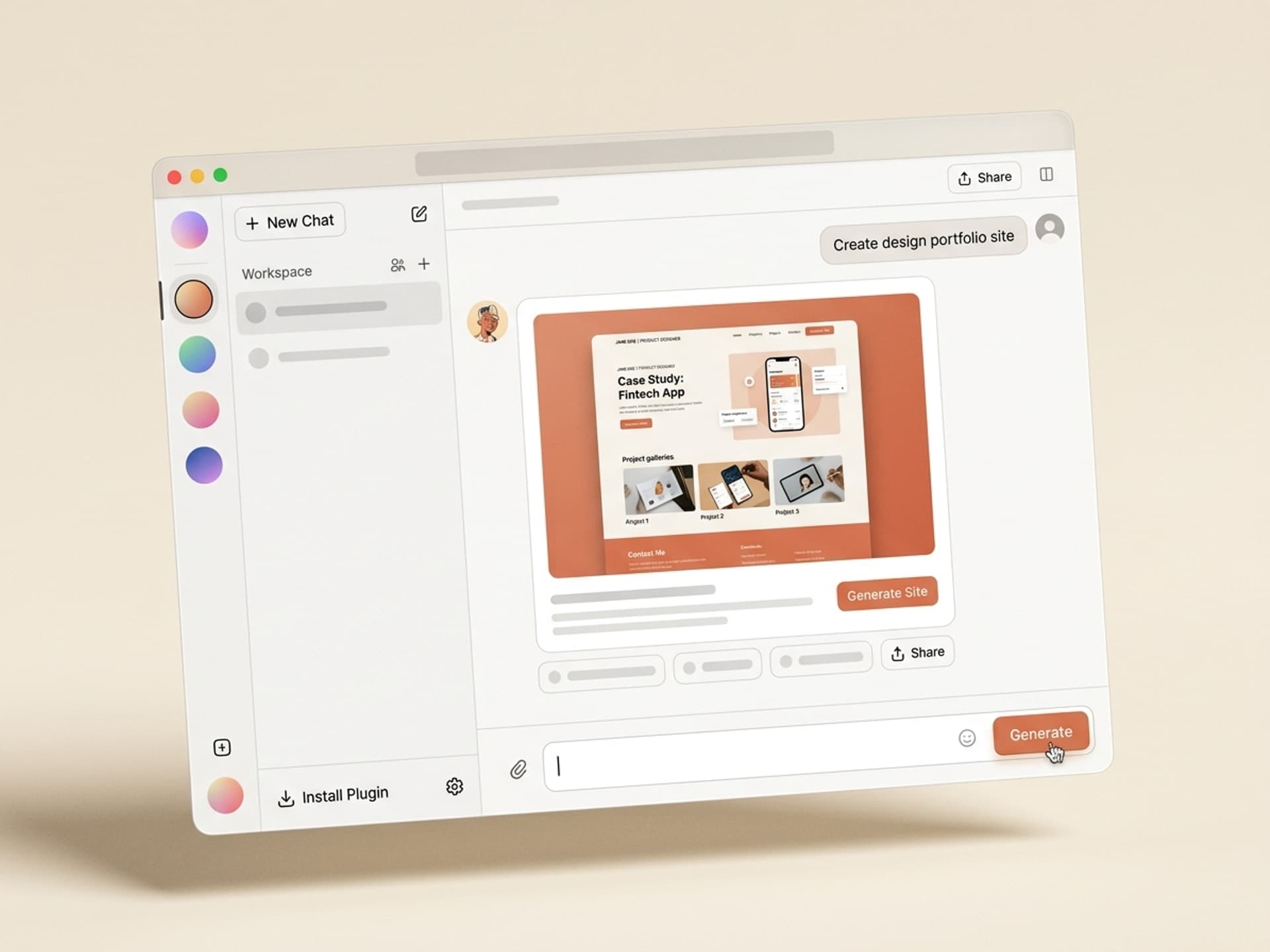
The hiring designer scrolling Behance at 11pm is looking for one thing: a custom domain that proves you can ship. Not another tile in the algorithm. AI skills for portfolio sites on Vibe Skills generate a full custom designer portfolio website - hero, case studies, project grid, about, contact - in under 2 hours. No Webflow learning curve, no $4,000 freelance dev, no template that screams "Squarespace 2019".
This guide covers why generic platforms hold senior designers back, the anatomy of a portfolio site that actually books work, and the 5 skills on Vibe Skills that get you live this weekend.
Browse hundreds of ready-made skills for Claude, Cursor, and more.
Why Behance Isn't Enough for Senior Designers
Behance and Dribbble are top-of-funnel discovery, not closing tools. They work for getting noticed. They fail at getting hired.
Three specific problems senior designers hit on platform-only portfolios:
- Algorithm dependence: Your latest shot drops off the feed in 48 hours. Hiring managers searching "motion designer Brooklyn" don't find your 2024 best work, they find whatever you posted yesterday.
- No narrative control: A Behance project page is image, image, image, generic description. No problem framing, no metric, no client outcome. You can't tell the story of why the work mattered.
- No brand: Your URL is
behance.net/yourname. Every other designer has the same URL pattern. You look like a freelancer between gigs, not a studio.
A custom designer portfolio website fixes all three. Your case studies live forever at yourname.com. You control the narrative arc. Your URL becomes part of your brand.
The data backs this up. A 2026 industry survey of 800 hiring designers found that 73% of senior roles ($90k+) went to candidates with custom domains, compared to 28% for Behance-only applicants. The signal is strong: a custom site reads as serious.
Browse hundreds of ready-made skills for Claude, Cursor, and more.
Portfolio Site Anatomy: What Actually Converts a Visitor Into a Client
Most designer portfolio sites fail not because the visuals are bad but because the structure is wrong. Here is the anatomy that books work in 2026:
| Section | Purpose | What it must contain |
|---|---|---|
| Hero | 5-second pitch | Name, role, location, 1 sentence value prop, 1 CTA (View Work / Get In Touch) |
| Selected Work Grid | Filterable proof | 6 - 9 projects, hover preview, category filter (Branding / UI / Motion / Print) |
| Case Study Pages | Deep narrative | Problem, role, process, outcome, 4 - 8 hero shots, metric or quote |
| About | Trust + personality | Headshot, 200-word bio, client logos, awards, current city |
| Services / Process | Pre-qualifies leads | What you do, who you work with, typical project length, starting price |
| Contact | Frictionless inquiry | Email, calendar link, project brief form (3 - 5 fields max) |
The mistake almost every designer makes: too many projects in the grid. Hiring managers look at 3 case studies max before they decide. Six strong projects beats 24 average ones. Cut ruthlessly.
The second mistake: missing the case study layer entirely. A project tile linking to a Dribbble shot is not a case study. A case study explains the brief, your role on the team, what changed, and what the client got. Without it, you look like a juniors who designed in isolation.
5 AI Portfolio Skills on Vibe Skills
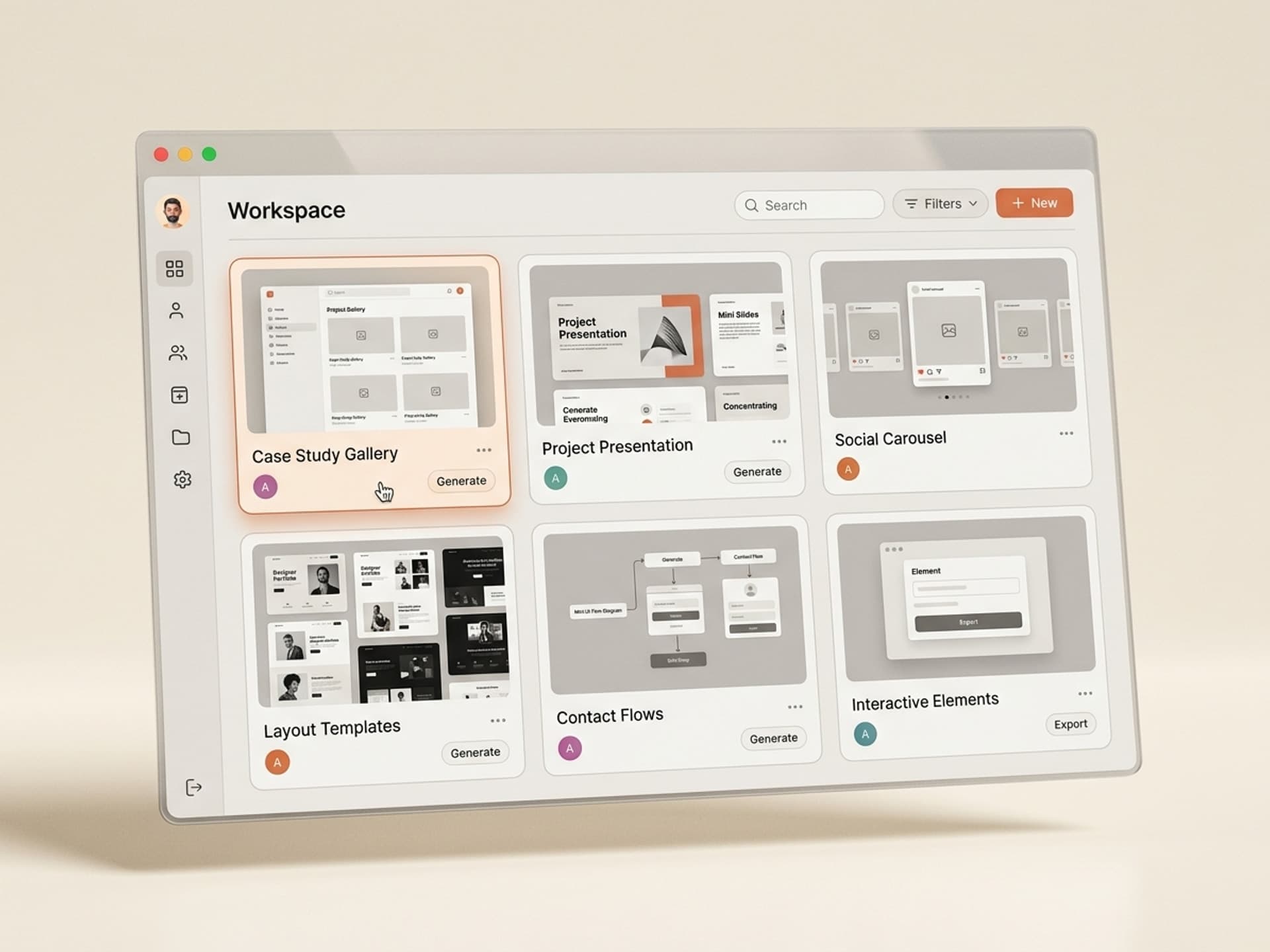
The Web & UI Design category on Vibe Skills includes ready-to-install skills that generate complete designer portfolio sites. Each one ships with case study templates, project galleries, contact flows, and exports to Webflow, Framer, or static HTML on Vercel.
Here are the 5 most useful for designers in 2026:
| Skill | Best for | Output |
|---|---|---|
| Designer Portfolio Site Generator | Solo designers, all disciplines | Full multi-page site with 6 - 9 case studies, about, contact |
| Motion Designer Reel Site | Motion designers, AE artists | Hero reel autoplay, project grid with video previews, breakdown shots |
| Photographer Portfolio Builder | Photographers, art directors | Full-bleed image grid, lightbox, series-based collections |
| Freelancer Service Site | Freelancers selling productized services | Hero, services with pricing, case studies, booking calendar embed |
| Studio Site for Solo Founders | Designers branding as a studio | Multi-discipline grid, team page (even if it's just you), client logos |
Each skill ships with investor-grade typographic systems, real layout grids built by working designers, and 4 - 6 color theme presets. You drop in your project images, your bio, your client list. The skill handles structure, type hierarchy, spacing, motion details, responsive breakpoints.
Browse Web & UI Design skills on Vibe Skills to preview real output before installing.
Ship Your Portfolio in a Weekend
A full custom designer portfolio website used to take 6 - 8 weeks: 2 weeks of Webflow learning, 2 weeks of design, 2 weeks of build, 2 weeks of revisions. With AI skills, the same site ships in a Saturday afternoon. Here is the exact path:
Step 1: Pick the right portfolio skill on Vibe Skills
Match your discipline to the skill. Motion designers pick the Motion Designer Reel Site. Photographers pick the Photographer Portfolio Builder. Generalists pick the Designer Portfolio Site Generator. Install via the Web & UI Design category.
Step 2: Pull together your 6 best projects
Cover image, 4 - 8 hero shots per project, 200-word case study (problem, role, outcome), one client quote or metric per project. If a project doesn't have a client outcome, leave it out or rewrite the description around the design problem you solved.
Step 3: Run the skill with your inputs
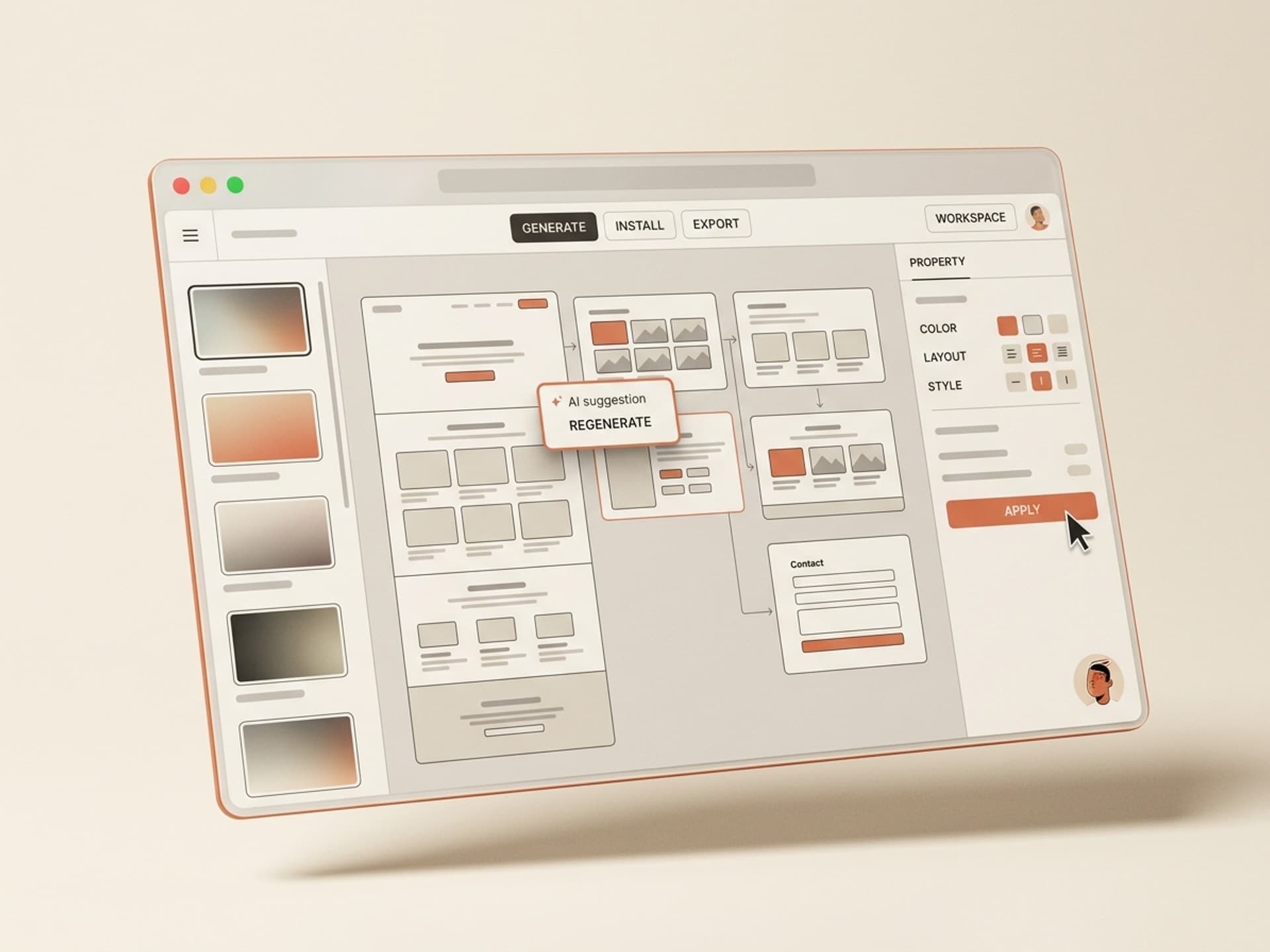
Bio, headshot, client list, color palette, font preferences, social handles, calendar link. The skill generates the full site structure, copywrites the section headers, lays out each case study, and builds the contact flow.
Step 4: Export to your platform of choice
- Webflow for designers who want CMS power and don't mind paying $14/month
- Framer for the smoothest no-code editing experience and free hosting
- Static HTML on Vercel for total control, zero monthly cost, custom code freedom
- Cargo or Squarespace if you already have an account and want minimum migration effort
The export is editable. Tweak the type, swap a hero shot, rewrite a paragraph. The skill gives you 90% finished, you ship the last 10%.
Step 5: Buy the domain and go live
Namecheap or Cloudflare Registrar, $12/year. Connect to your platform, set up email forwarding, ship.
Total time: a Saturday morning to gather assets, a Saturday afternoon to run the skill, Sunday morning to polish and publish.
Frequently Asked Questions
Can I use a custom domain with these portfolio skills?
Yes. Every skill exports to Webflow, Framer, Vercel, or raw HTML so you can connect any custom domain you own. Buy the domain on Namecheap or Cloudflare for around $12/year, then point it at your hosting platform. Browse Web & UI skills on Vibe Skills to see export formats per skill.
What case study format should I use for design work?
The 5-section format works best: problem (what was broken), role (what you specifically did on the team), process (3 - 5 steps with visuals), outcome (a metric, a quote, or a launch), gallery (4 - 8 hero shots). AI portfolio skills on Vibe Skills generate this layout for you, you fill in the content. Around 200 - 400 words per case study is the sweet spot.
How do I show client work that's under NDA?
Three options. First, redact the client name and replace with "Major fintech app" or "Fortune 500 retailer". Second, blur out logos and copy in the screenshots, keep the layout and design system visible. Third, recreate the work as a personal project after the NDA window ends. The portfolio skills on Vibe Skills include layout slots for redacted projects so they don't break the visual flow.
Are AI-generated portfolio sites obviously AI-generated?
No, because the visual systems are hand-built by designers. The AI skill fills in your content, structure, and case studies while the typographic system, grid, motion details, and component library stay craft-grade. The output looks like a designer made it, because a designer did make the system.
What about Webflow vs Framer vs Squarespace for hosting?
Framer is fastest to edit, free for portfolio-size sites, and has the smoothest motion controls. Webflow has more CMS power but costs $14/month and has a steeper learning curve. Squarespace works if you already have an account but feels dated for design work. Most designers in 2026 default to Framer or Vercel-hosted static sites. The portfolio skills on Vibe Skills export to all four so you can switch later.
How often should I update my portfolio site?
Quarterly at minimum, after every major project launch ideally. Senior designers who get hired fastest update at least one case study per month. Set a calendar reminder for the first of every quarter to swap the oldest case study for your most recent strong project.
Can I sell my portfolio template back on Vibe Skills?
Yes. If your portfolio system is unique enough to be reused, package it as a skill and submit to the marketplace. Creators on Vibe Skills earn 30% of gross subscription revenue, distributed monthly via the creator pool. See the Web & UI Design category for examples of designer-built portfolio skills already on the marketplace.
Stop Building Your Portfolio From Scratch
Your portfolio is a sales tool, not an art project. Senior designers who book the most work spend an afternoon shipping the site, then go back to making client work. The 6-week portfolio rebuild is dead in 2026.
Pick a skill that matches your discipline. Run it with your projects. Export to your platform. Ship.
Browse Web & UI Design skills on Vibe Skills →
Skip the 6-week portfolio rebuild. Install a portfolio skill on Vibe Skills and ship your custom designer portfolio website this weekend.