
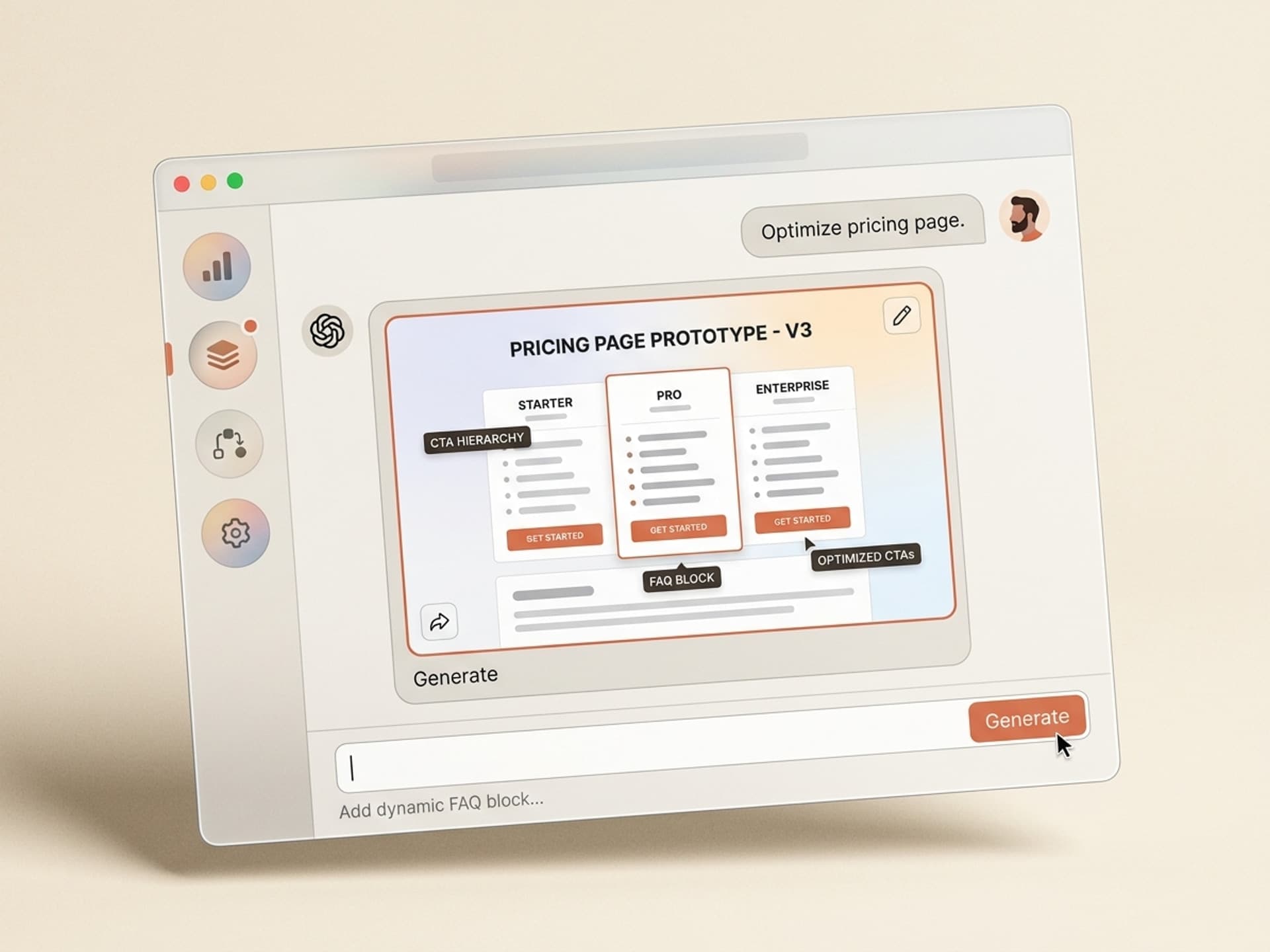

Browse hundreds of ready-made skills for Claude, Cursor, and more.
The Best AI Skills for SaaS Pricing Page Design: Why Your Pricing Page Is the Single Highest-Leverage Page You Own
The best AI skills for SaaS pricing page design in 2026 generate the full pricing system - 3 to 4 plan cards, comparison table, FAQ, social proof block, and a billing toggle - in one pass, ready to drop into Next.js, Webflow, or Framer. A pricing page is the highest-converting page on a SaaS site, and the difference between a bland 3-card layout and a Linear-grade pricing system is measurable in monthly recurring revenue.
Linear, Stripe, Notion, Vercel, Framer, and Webflow all rebuilt their pricing pages between 2023 and 2026. The pattern is now consistent: clear plan cards with one feature highlighted, a deep comparison table, an annual/monthly toggle that updates pricing in place, social proof above the fold, and an FAQ that pre-empties every objection. Most SaaS pricing pages still ship as a 3-card afterthought.
This guide covers the 7 SaaS pricing page skills we recommend on Vibe Skills in 2026, what each one ships, and how to put a Stripe-grade pricing page on your site this week.
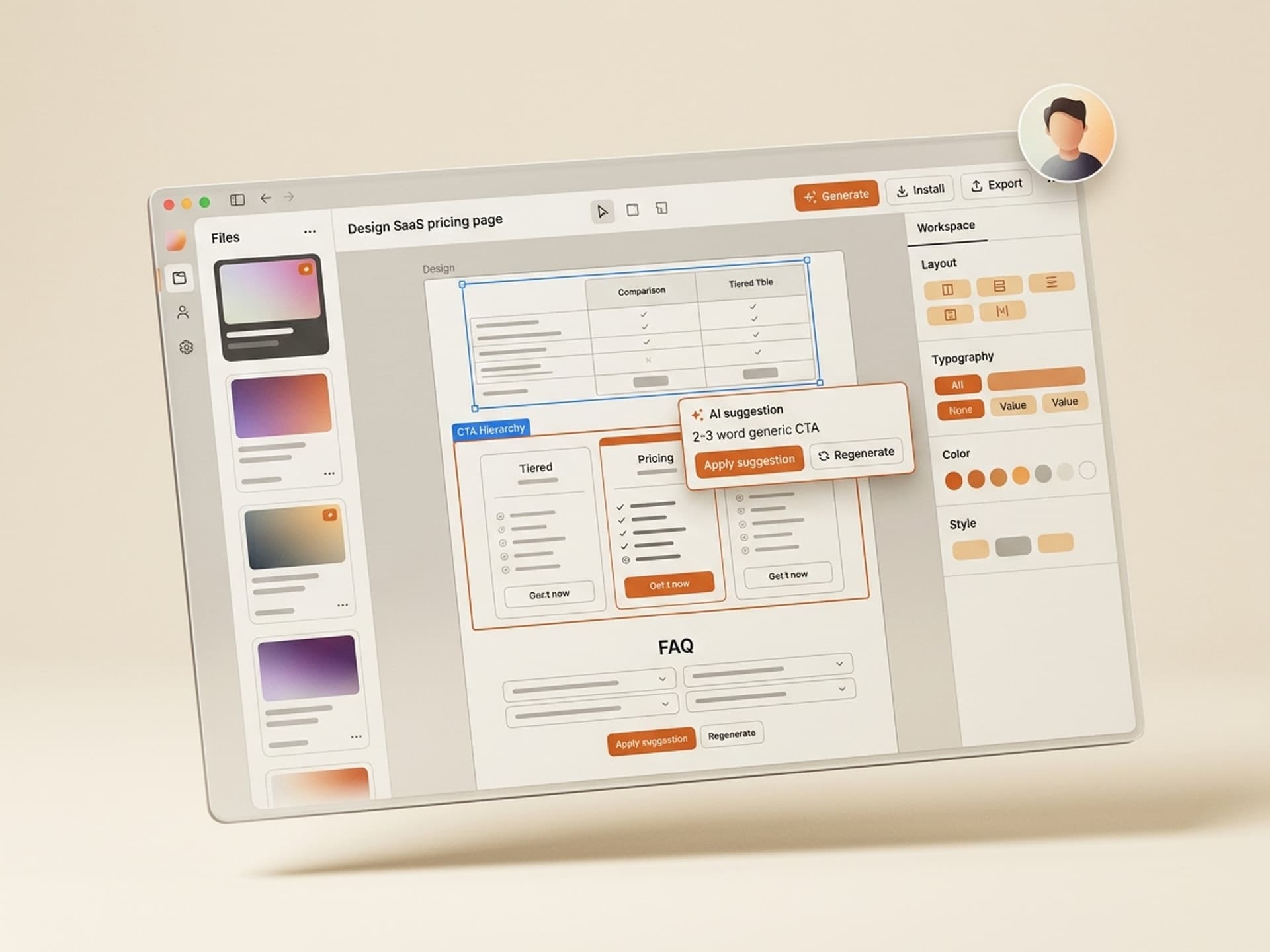
Browse hundreds of ready-made skills for Claude, Cursor, and more.
Why Pricing Page Design Decides SaaS Revenue
The pricing page is where intent meets friction, and design is the friction. Every visitor on this page has already decided they might buy. The job of the page is to remove every reason to bounce and give them a confident answer to "which plan and how much".
Pricing pages convert at 3 - 8x the rate of any other marketing page on a SaaS site. Founders obsess over homepage hero copy and ignore the page that closes the deal. The result is a pricing page that loads slower than the homepage, has weaker visual hierarchy, missing comparison data, no FAQ, and a mobile layout that breaks at 4 columns.
The pattern from teams that fixed it:
- Linear ships a 3-card pricing page with a clean comparison table, an enterprise CTA, and an FAQ - no clutter
- Stripe uses a calculator-driven pricing page that updates per-product as you toggle features
- Notion runs a 4-card pricing page (Free / Plus / Business / Enterprise) with a long-form comparison and a separate AI add-on row
- Vercel built a pricing page with a billing toggle, hard usage limits, and a "compare plans" expandable that reveals 60+ rows
- Webflow ships per-site and per-workspace pricing on the same page with a tab system that flips the entire layout
- Framer shows annual pricing by default and uses a "save X%" badge to anchor the discount
The conversion data backs the pattern. Pricing page rebuilds at SaaS teams in the 2025 - 2026 window have reported 15 - 40% lifts in trial-to-paid conversion and 8 - 22% lifts in average revenue per signup when the new page added a comparison table, social proof above the fold, and an annual toggle defaulting to annual.
The catch used to be cost. A custom Stripe-grade pricing page from a freelance designer + frontend pair runs $8,000 - $25,000 and takes 4 - 8 weeks of design and engineering iteration. AI skills collapse that to a single afternoon.
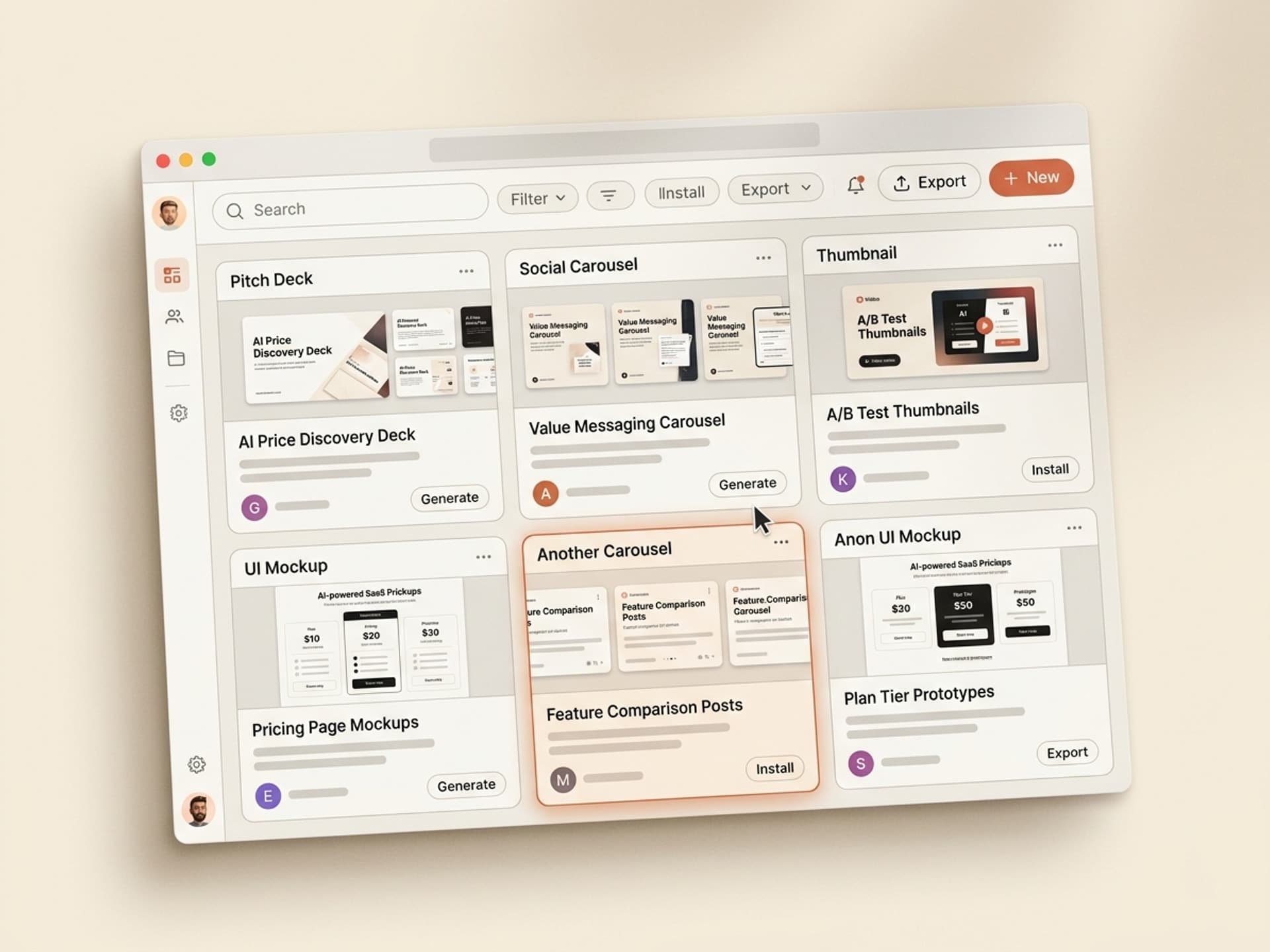
Browse hundreds of ready-made skills for Claude, Cursor, and more.
The Anatomy of a Pricing Page That Converts
A pricing page that ships revenue has six layers. Most SaaS pricing pages ship two or three and wonder why conversions plateau. A real AI pricing page skill ships all six.
| Layer | What it does | Why it matters | Common mistake |
|---|---|---|---|
| Plan cards | 3 - 4 cards with name, price, key features, CTA | The first scan. Visitors decide their plan in 8 seconds. | All cards look the same - no recommended pick |
| Billing toggle | Monthly / Annual switch that updates prices in place | Defaults set the anchor. Annual default = higher ARPU. | Toggle is buried below the fold or refreshes the page |
| Comparison table | Long-form feature matrix across all plans | Closes the "which plan is right for me" objection | Missing entirely, or hidden behind a click |
| Social proof | Logos, testimonials, customer count above the fold | Lowers risk for the buyer in the first 2 seconds | Logos at the bottom where nobody scrolls |
| FAQ | 6 - 12 pre-empted objections | Reduces support tickets and saves the sale | Generic FAQ that does not answer real buyer questions |
| Enterprise / Sales CTA | Dedicated card or banner for "Contact sales" | Prevents large accounts from self-selecting into the wrong plan | Either missing, or so prominent it nukes self-serve |
The plan cards are not equal. A pricing page that converts always has one plan visually elevated as "Most Popular" or "Recommended". This is not decoration. It is the anchor that drives 50 - 70% of buyers into your target plan. Linear elevates Standard. Notion elevates Plus. Vercel elevates Pro. Pick the plan that maximizes blended ARPU and lifetime value, then make it the visual hero.
The billing toggle defaults the anchor. If your toggle defaults to monthly, you are anchoring buyers on the smaller number. Default to annual and badge the savings ("Save 25%") and you immediately move ARPU up. Framer, Linear, and Vercel all default to annual.
The comparison table is where the deal actually closes. Buyers who scroll past the cards are in the "convince me" stage. The comparison table is your closer. It needs to be long, structured by category (Limits / Features / Support / Compliance), and use clear binary indicators (check marks, dashes, "Custom" pills). Skipping this is the single biggest mistake on indie SaaS pricing pages.
7 AI Skills for SaaS Pricing Page Design on Vibe Skills
These are the 7 SaaS pricing page skills we recommend in 2026. All live in the Web & UI Design category on Vibe Skills and ship as React, Next.js, or Webflow / Framer-ready components with comparison tables, FAQ, and billing toggles built in.
1. 3-Card Pricing Page Generator (Linear-Style)
The clean 3-card layout with one plan elevated as "Most Popular". Pass in your plans, prices, and feature lists, and the skill generates the cards, billing toggle, comparison table, FAQ, and a social proof bar. Ships as a single Next.js page or Framer template.
Best for: SaaS, dev tools, indie products, anyone whose pricing fits cleanly into 3 plans.
Output: <PricingPage /> Next.js page or .framer template, comparison table, FAQ section.
Time to ship: 60 - 90 minutes from input to deployed.
2. 4-Card Pricing Page (Notion / Vercel-Style)
The 4-card layout for products that need Free, Standard, Pro, and Enterprise. Same generator as the 3-card skill, but with the visual hierarchy tuned for 4 columns on desktop and a 2x2 grid on tablet.
Best for: Freemium SaaS, products with a clear free tier, anything that needs an enterprise upsell on the same page.
Output: <PricingPage4 /> component with responsive 4-column grid, full comparison table, enterprise CTA card.
3. Pricing Comparison Table Skill
A standalone deep comparison table you can drop under existing plan cards. Generates 40 - 80 rows organized by category (Limits, Features, Integrations, Security, Support), with sticky column headers and mobile-friendly horizontal scroll.
Best for: Mature SaaS with a long feature list, products that lose deals to "I do not know what I get".
Output: <ComparisonTable /> component with JSON-driven rows, responsive sticky headers, plan-color highlighting.
4. Annual / Monthly Billing Toggle
The interactive toggle that flips prices in place with a "Save X%" badge. Drops into any existing pricing page. Persists choice in URL query param so the user can share their selection, and respects deep links from email campaigns ("?billing=annual").
Best for: Existing pricing pages missing a toggle, or pages where the toggle is buried below the fold.
Output: <BillingToggle /> client component with URL state, animated price transitions, and discount badge logic.
5. Pricing Page FAQ Generator
A pre-built FAQ section answering the 12 questions every SaaS buyer asks ("What if I exceed my limit?", "Can I switch plans?", "Do you offer refunds?", "What payment methods?", "Is there a free trial?", and 7 more). Tuned for accordion UX and primed for FAQ schema markup.
Best for: Pricing pages with no FAQ, or FAQs that read as marketing fluff instead of real answers.
Output: <PricingFAQ /> accordion + JSON-LD FAQPage schema for rich results in Google.
6. Social Proof Pricing Strip
The above-the-fold customer logo bar with rotating testimonials. Pulls 8 - 16 customer logos and 3 testimonials into a tight strip directly under the page heading, before the plan cards.
Best for: Brands with strong customer logos, products that need to lower buyer risk before the price reveal.
Output: <PricingProofStrip /> component with logo carousel, animated testimonial rotation, and a "Used by 5,000+ teams" counter.
7. Enterprise / Sales CTA Block
The dedicated "Talk to sales" panel for accounts that exceed self-serve limits. Renders as either a 4th card or a full-width banner under the comparison table. Pre-wired to your demo booking system (Cal.com, HubSpot, Calendly).
Best for: SaaS with a real upmarket motion, products where 30%+ of revenue comes from enterprise.
Output: <EnterpriseCTA /> block with calendar embed, trust signals (SOC 2, GDPR badges), and a clear "Contact sales" path.
Browse all web & UI skills on Vibe Skills
Ship Pricing Page Variants in a Day
The full workflow from "we need a better pricing page" to "the new page is live and the A/B test is running". Step 1 is always picking the right skill on Vibe Skills - do not start by writing card components from scratch.
Step 1: Pick the right skill on Vibe Skills
Go to the Web & UI Design category on Vibe Skills and match the pattern to your business model. 3 plans without a free tier? Pick the 3-Card Generator. 4 plans with Free + Enterprise? Pick the 4-Card. Already have plan cards but no comparison table? Add the Comparison Table skill on top.
If you are not sure, the 3-Card Generator handles 70% of SaaS pricing pages. You can always layer the Comparison Table, FAQ, and Social Proof skills on top later.
Step 2: Provide the inputs
Every pricing page skill on Vibe Skills asks for the same inputs:
- Plans (name, monthly price, annual price, target buyer)
- Features (full list of features per plan, with limits)
- Brand colors (primary + 1 accent, hex codes)
- Customer logos (8 - 16 PNG/SVG files for the social proof strip)
- Tech stack (Next.js, Remix, Astro, Webflow, Framer)
- Highlighted plan (which plan should render as "Most Popular")
If you do not have customer logos, the social proof strip falls back to a counter ("Used by 5,000+ teams") and a single testimonial.
Step 3: Generate variants
The skill produces 2 - 3 variants by default:
- Variant A: Annual toggle default, "Most Popular" elevated on Standard
- Variant B: Monthly toggle default, "Most Popular" elevated on Pro
- Variant C: Long comparison table front and center (no card elevation)
Preview all three on Vibe Skills' live sandbox. Pick one as control, ship one as the test.
Step 4: Drop it into your project
For Next.js / React:
pnpm add @heroui/react clsx framer-motion
Copy the page into app/pricing/page.tsx, copy the comparison table data into data/pricing.ts, and update your brand colors in tailwind.config.js. The skill ships TypeScript types and is fully tree-shakeable.
For Webflow or Framer, import the .webflow or .framer package directly.
Step 5: Wire up the analytics
Track these 6 events from day one:
pricing_page_viewedpricing_toggle_changed(withmonthlyvsannual)pricing_card_cta_clicked(with plan name)comparison_table_scrolled(intersection observer)pricing_faq_opened(with question)enterprise_cta_clicked
Without these, you cannot tell which plan is converting and which FAQ is doing the work.
Step 6: Ship and A/B test
Total elapsed time from Step 1 to deployed: 4 - 6 hours for a first pricing page. 2 hours for an iteration. Run the A/B test for 2 - 4 weeks before declaring a winner - pricing pages need volume to reach significance.
Frequently Asked Questions
Should I use 3 cards or 4 cards on my pricing page?
3 cards if your buyer journey is "Free trial → Paid → Enterprise" with one self-serve tier. 4 cards if you have a permanent free tier (Notion, Vercel, Framer model) or if you have a clear power-user plan between Standard and Enterprise. Most SaaS converts better at 3, but freemium products convert better at 4. Browse the Web & UI Design category to preview both layouts before deciding.
Should I show or hide the enterprise plan?
Show it. Either as a 4th card or as a full-width "Contact sales" banner under the comparison table. Hiding enterprise pricing forces high-value accounts to leave the page to find the contact form, and most do not come back. The enterprise card does not need a number - "Custom" is the right answer.
Should the billing toggle default to monthly or annual?
Annual. Defaulting to annual anchors the buyer on a lower per-month number ("$24/mo billed annually" reads cheaper than "$29/mo billed monthly"), boosts ARPU, and reduces churn. Show a "Save 20 - 30%" badge next to the annual option. Linear, Vercel, Framer, and Notion all default to annual.
Do I need a comparison table?
Yes - if you have more than 5 features per plan. The plan cards close the easy buyers. The comparison table closes the deliberate buyers. Skipping it is the single biggest mistake on indie SaaS pricing pages and the single fastest fix when you add it. The Pricing Comparison Table skill on Vibe Skills ships 40 - 80 rows organized by category, with sticky headers and mobile horizontal scroll.
How long should the FAQ section be?
8 - 12 questions. Cover: limits, plan switching, refunds, payment methods, free trial terms, billing cadence, taxes / VAT, security / SOC 2, data export, cancellation, team seats, and one product-specific question. Generic FAQs ("What is your product?") signal low effort - your pricing page FAQ should answer real billing and plan objections, not marketing intros.
What about social proof on a pricing page?
Customer logos above the fold, between the page heading and the plan cards. 8 - 16 logos in a horizontal strip, ideally rotated through animation. Add 1 - 3 short testimonials directly under the strip. The pattern lowers buyer risk in the first 2 seconds, before the price reveal. Stripe, Linear, and Webflow all use it.
How do I price an annual discount?
15 - 25% is the standard SaaS range. 20% is the most common anchor (Linear: 20%, Vercel: ~17%, Framer: 23%, Notion: 20%). Any less and the toggle does not move buyers. Any more and you signal weakness in your monthly pricing. The exact number should be set by your finance team based on cohort retention curves.
Can I edit the generated pricing page after install?
Yes. The output is plain TypeScript + Tailwind (or .framer / .webflow for those tools). You own every component file. Edit colors, swap plan structure, retune the comparison rows, change the FAQ. The skill ships clean, commented code - not a black box.
The Quick CTA: Stop Building Pricing Pages From Scratch
Your pricing page is the single highest-leverage page on the site. A generic 3-card layout with no comparison table, no annual toggle defaulting to annual, no above-the-fold social proof, and a stub FAQ is leaving 15 - 40% of revenue on the table every month.
The teams shipping Stripe-grade pricing pages are not all hiring senior product designers and frontend engineers. They are installing AI skills that ship the whole stack (cards, toggle, comparison table, FAQ, social proof) in under a day.
If your pricing page has been on the "Q3 redesign" backlog since Q1, you can ship the new version this week.
Browse SaaS pricing page skills on Vibe Skills →
Skip the $15,000 freelance quote and the 6-week timeline. Install a pricing page skill on Vibe Skills.