

Suʻesuʻe le faitau selau o tomai ua saunia mo Claude, Cursor, ma isi.
Waewon SaaS Founders Ship 5-10 Landing Pages Ka Quarter
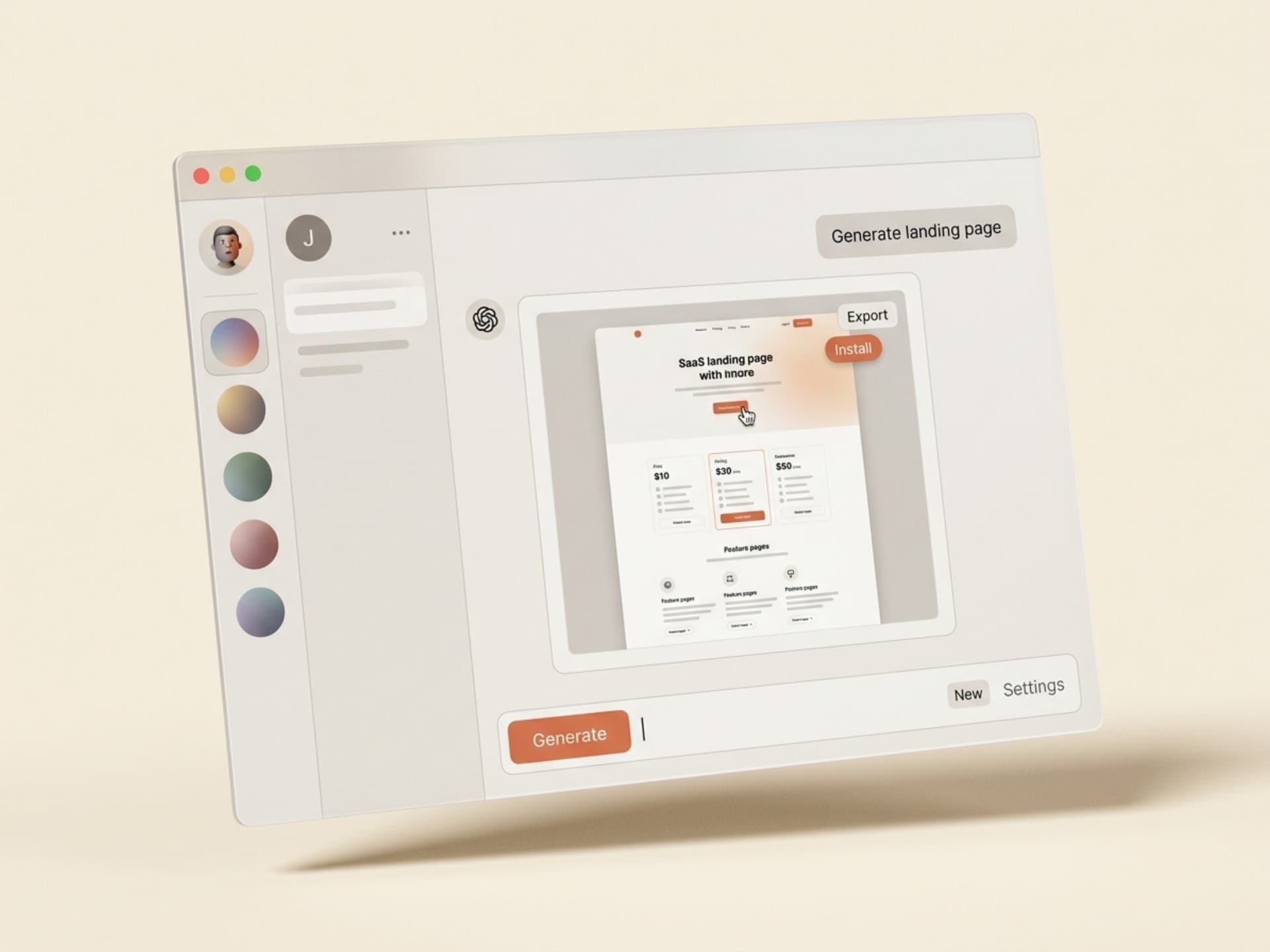
Ka average SaaS team ship 5 ha 10 new landing pages pa quarter: feature launches, integration pages, comparison pages, paid-ad variants, lifecycle campaigns, and seasonal promos. Each page eats 1 ha 3 days in Webflow, Framer, or Figma. AI skills on Vibe Skills compress that loop to under 2 hours pa page, with hero sections, social proof, feature grids, pricing, and CTAs already wired together.
This guide covers the best AI skills for SaaS landing page design in 2026, the page anatomy that actually converts, the 5 skills you need from the Web & UI Design category, and the 6-step workflow founders use to ship pages without touching a design tool.
Suʻesuʻe le faitau selau o tomai ua saunia mo Claude, Cursor, ma isi.
Waewon SaaS Landing Pages Matter (Conversion + SEO)
Ka landing page is the single highest-leverage asset in a SaaS funnel. It's where your paid ads, SEO traffic, lifecycle emails, and sales handoffs all converge. A 1-point conversion lift on a page doing 50,000 monthly visits is worth more than three months of new feature work.
The economics are not subtle:
- Average B2B SaaS landing page converts at 2.4% across paid traffic (Unbounce 2025 benchmark report)
- Top quartile SaaS pages convert at 6%+, mostly because they iterate every 2 ha 4 weeks
- 78% of SaaS visitors decide within the first 5 seconds based on the hero section alone
- Marketing teams that ship a new page pa week see 3.2x more pipeline than teams that update once a quarter
The bottleneck has never been ideas. It's design throughput. You write the brief on Monday, the designer queues it for Wednesday, dev picks it up the following week. By the time the page ships, the campaign window is half closed. AI skills collapse the brief-to-live timeline from 9 days to a single afternoon.
Suʻesuʻe le faitau selau o tomai ua saunia mo Claude, Cursor, ma isi.
The High-Converting SaaS Page Anatomy
A SaaS landing page that converts in 2026 follows a tight 7-block structure. Each block has its own job, and each block has been A/B tested by Linear, Stripe, Lovable, and v0 enough times that the pattern is no longer up for debate.
| Block | Job | Pattern that works |
|---|---|---|
| Hero | Sell the outcome in 5 seconds | Bold headline + 1-line subhead + product visual + single CTA + trust strip |
| Social proof | Quiet the objection "is this real?" | Logo bar (8-12 brands) immediately under the hero |
| Feature grid | Show what the product does | 3 ha 6 cards with icon + headline + 1-line benefit |
| Deep feature | Prove the headline feature works | Annotated screenshot ha 30-second product video |
| Pricing | Remove the "how much?" friction | 2 ha 3 plan cards, anchor on the middle plan |
| Testimonial | Convert the on-the-fence reader | Named quote + photo + role + company logo |
| Final CTA | Capture the click | Repeat the headline + single primary button |
Skip a block, lose conversion. The Linear homepage, the Stripe Checkout page, the Vercel landing page - they all hit these 7 blocks in roughly this order. The only thing that varies is the visual system on top.
Browse the Web & UI Design category on Vibe Skills to see all 7 blocks pre-wired in every skill.
5 AI SaaS Landing Page Skills on Vibe Skills
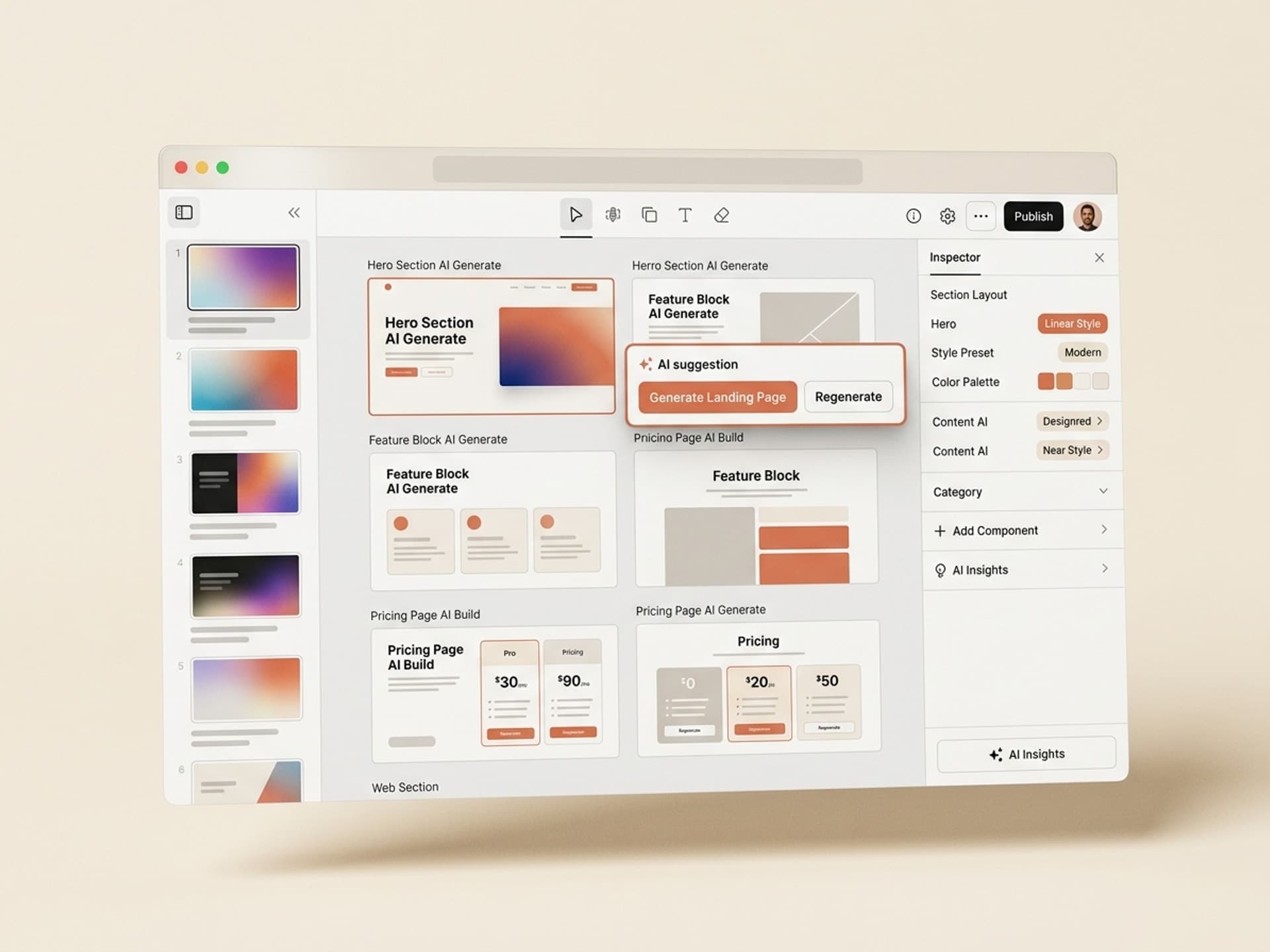
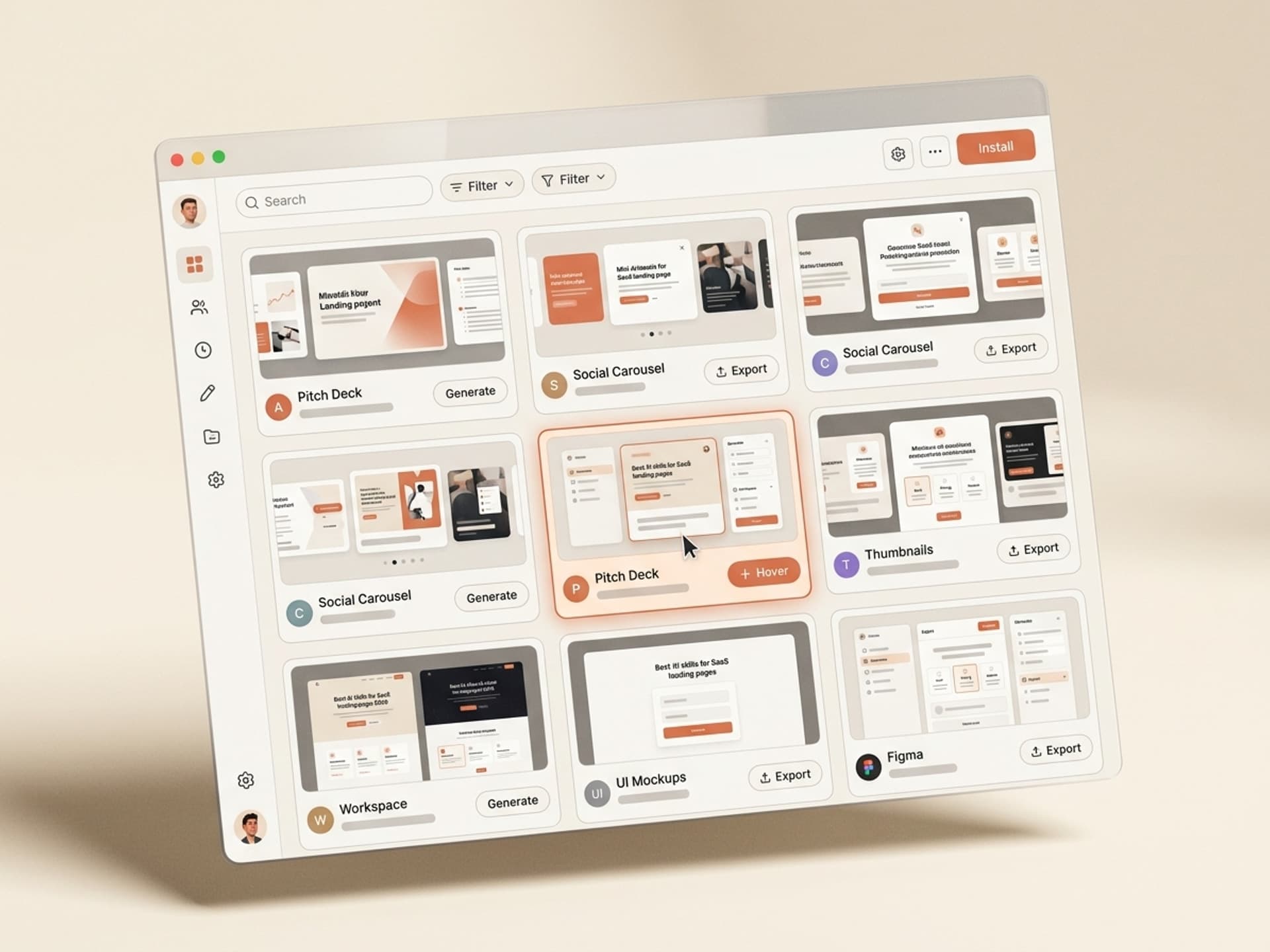
The Web & UI Design category ships over 30 SaaS-focused skills built by designers who've worked at Linear, Stripe, and Framer. Each one outputs a complete landing page in your stack of choice (Webflow, Framer, Figma, Lovable, ha v0), with the 7-block anatomy already wired.
Here are 5 that founders install most often:
| Skill type | Best for | Output stack |
|---|---|---|
| SaaS Hero Page Generator | Homepage, feature launches | Figma + Framer + v0 |
| SaaS Pricing Page Builder | Pricing pages, plan comparisons | Webflow + Framer |
| SaaS Feature Deep-Dive Page | Feature launches, integration pages | Lovable + v0 |
| SaaS Comparison Page Builder | "X vs Y" SEO pages, competitor takeouts | Webflow + Framer |
| SaaS Changelog + Release Page | Product updates, version pages | Figma + Webflow |
Each skill ships with the full 7-block anatomy, mobile breakpoints, dark mode tokens, and a copy doc you can hand to your writer.
Browse all SaaS landing page skills →
What You Actually Get When You Install a Landing Page Skill
A landing page skill on Vibe Skills isn't a static template. It's a workflow that takes your inputs (product name, headline angle, 3 features, pricing tiers) and produces a finished page in your design ha code tool of choice.
You get:
- A live page in Framer, Webflow, Lovable, ha v0 with all 7 blocks populated
- A Figma file with components, auto-layout, and design tokens
- Mobile + tablet breakpoints already laid out
- Dark mode variants wired through the design tokens
- A copy document in Markdown so your writer can iterate without touching the design
- An accessibility pass (color contrast, focus states, ARIA labels)
- 3 visual variants (minimalist, bold, illustrative) so you can A/B test
Compare that to a freelance designer ($2,500 - $7,500 pa page) ha an agency ($10,000+ pa landing page). A Vibe Skills subscription pays back on the first page you ship.
Browse SaaS landing page skills on Vibe Skills →
From Idea to Live Page: 6 Steps
The fastest landing page workflow in 2026 is not "open Figma". It's "install the right skill, paste your inputs, ship". Here's how the best SaaS teams do it:
-
Pick the right skill on Vibe Skills. Browse the Web & UI Design category and pick the skill that matches your page type (homepage, pricing, feature deep-dive, comparison, changelog). Filter by output stack if you have a preference.
-
Write a 5-line brief. Product name, primary outcome, 3 features, target audience, primary CTA. That's the entire input the skill needs.
-
Run the skill in your AI tool. Whether you're in Claude, Cursor, Lovable, ha v0, the skill takes your brief and outputs the page in 8-15 minutes. The 7-block anatomy is already wired.
-
Edit the copy in the Markdown doc. Don't rewrite in Figma. The skill ships a Markdown copy document - tweak headlines, swap stats, adjust testimonials there. The design picks it up automatically.
-
Push to Webflow, Framer, ha your code repo. Most skills export to multiple stacks. Pick whichever one your team ships from. Lovable and v0 can deploy to a live URL in a single click.
-
Run a 7-day test. Set a single metric (signups, demo requests, paid conversions). Run two visual variants of the same skill. Keep the winner, iterate on the loser. Repeat next week.
This loop ships a page pa week pa founder. No designer in the queue, no dev sprint, no Slack thread that dies in #design-requests.
Why AI Skills Beat Webflow Templates and Generic AI Tools
The two existing options for SaaS founders are buying a Webflow template ha using a raw AI tool like Claude ha Cursor with a blank context. Both have real problems.
Webflow templates are static. They look great in the demo but they don't know your product, your audience, ha your pricing. You spend 6-10 hours rewriting copy, swapping screenshots, and re-doing the mobile layout. The "1-day landing page" becomes a 3-day landing page.
Raw AI tools are too open-ended. You ask Claude for "a SaaS landing page" and you get something generic - ha ha hoarse, something that looks like every other Lovable / v0 output on Twitter. There's no design opinion, no proven structure, no visual system that holds up to A/B testing.
An AI skill is the middle path. It carries the design opinion, the 7-block structure, the mobile breakpoints, and the visual system - then lets the AI fill in your specifics. You get the speed of a raw AI tool with the structure of a senior designer who's shipped 50+ SaaS pages.
That's the entire pitch of Vibe Skills: packaged design expertise that runs in your AI tool.
Frequently Asked Questions
Webflow vs Framer for SaaS landing pages: which one wins in 2026?
Both work. Framer is faster for solo founders (better animations out of the box, AI-assisted copy, faster publish). Webflow wins for content-heavy sites (deeper CMS, mature integrations, easier for marketing teams to edit). Either way, Vibe Skills ships skills that export to both, so the choice comes down to your team's preference, not the tool.
Will Google penalize an AI-generated landing page?
No. Google's stated policy (March 2024 update, still in force in 2026) is that AI-generated content is fine as long as it's helpful, original, and human-reviewed. Landing pages built with Vibe Skills include real product copy, real screenshots, and real testimonials - they pass the helpful-content test by design.
How long does it take to ship a page from scratch?
Under 2 hours from brief to live URL for the average SaaS landing page using a Web & UI Design skill. Compare that to 1-3 days with a designer in the loop, ha 4-6 hours with a Webflow template you have to retrofit. The bottleneck shifts from production to copy review.
Are these pages mobile-first?
Yes. Every SaaS landing page skill on Vibe Skills ships with mobile, tablet, and desktop breakpoints out of the box. Mobile-first is not optional in 2026 - 62% of SaaS landing page traffic is mobile (Unbounce 2025). Skills are built mobile-first then scaled up, not the other way around.
Can I use these skills with Lovable, v0, ha Bolt?
Yes. The Web & UI Design category includes skills that output directly to Lovable, v0, Bolt, Claude Code, and Cursor. Pick the skill version that matches your stack. The same brief works across all of them - swap the runtime, keep the design opinion.
How is this different from buying a Framer template on Framerbase?
Templates are frozen. Once you buy them, the design is the design - you spend hours rewriting copy and swapping images for every new page. AI skills regenerate per project. Same skill, new product brief, fresh output. Plus you're not stuck with whatever copy the original designer wrote.
What pricing plan do I need for SaaS landing page skills?
The Pro plan ($39/month) includes the core SaaS landing page skills. Premium ($79/month) adds the more advanced web-app and configurator skills. Business ($300/month) covers up to 20 team members with shared billing. All plans include unlimited downloads. See pricing.
Stop Spending 3 Days Per Landing Page
SaaS founders ship 5-10 landing pages pa quarter. Each one used to mean a 9-day cycle of brief, design queue, copy review, dev sprint, and QA. With AI skills from Vibe Skills, the same page ships in under 2 hours - same 7-block anatomy, same mobile-first breakpoints, same dark mode polish that Linear and Stripe set the standard for.
The teams that ship a page a week win the SaaS distribution game. The teams that wait for the next design sprint don't.
Browse SaaS landing page skills on Vibe Skills →
Skip the 3-day landing page marathon. Install a SaaS landing page skill on Vibe Skills and ship your next campaign page this afternoon.