
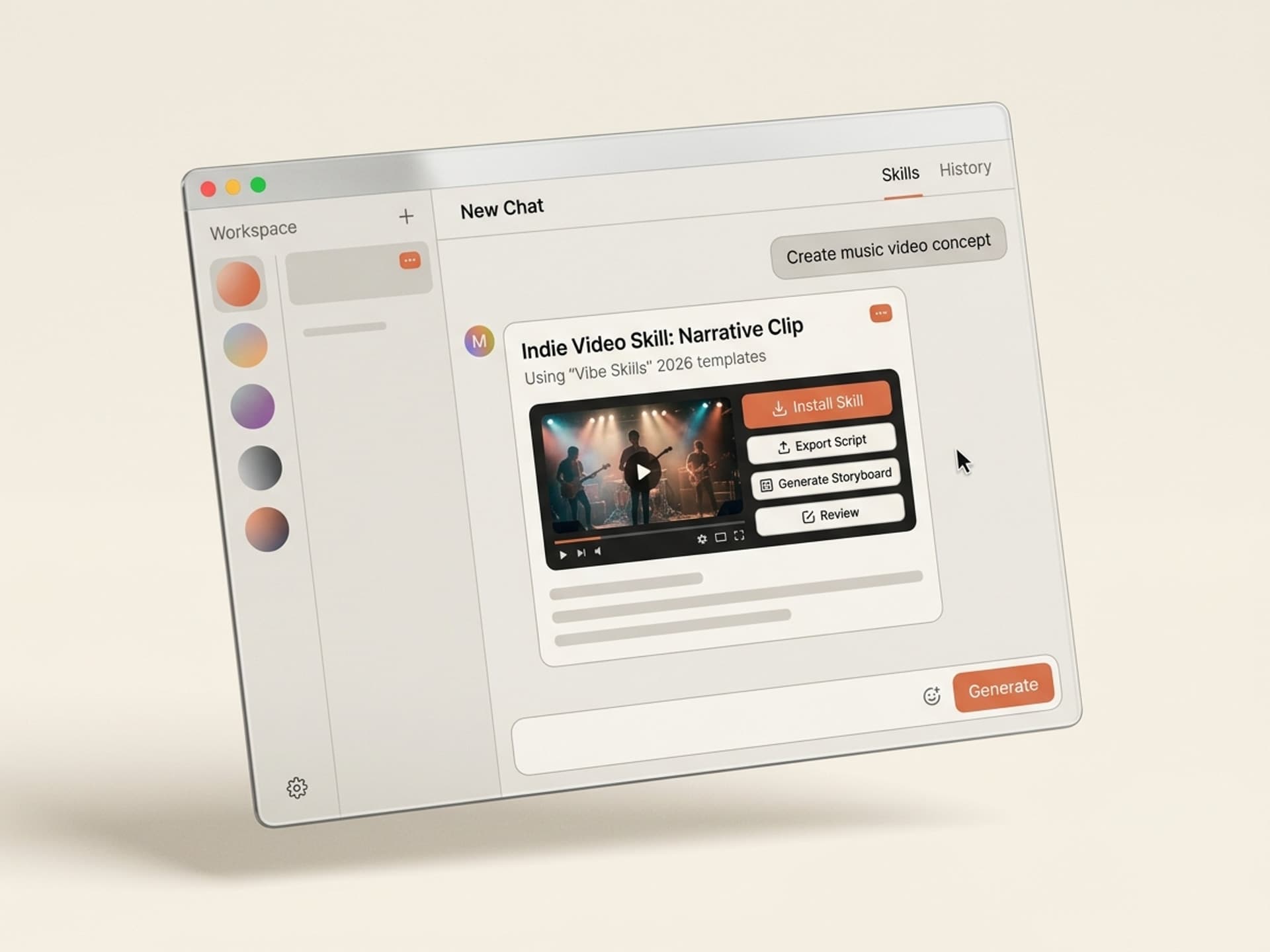

The Best AI Skills for Indie Music Video Templates Cut a $25,000 Job to a Weekend
A traditional indie music video runs $5,000 on the cheap end and crosses $50,000 fast for anything cinematic. AI skills for music video templates compress that to a weekend, a laptop, and a Vibe Skills subscription. The skills below live on Vibe Skills and ship the four formats that actually move streams in 2026: lyric videos, visualizers, narrative clips, and performance edits.
Indie artists release more music than ever - over 120,000 tracks hit Spotify per day in 2025 - but the visual layer that turns a release into a campaign is still gated behind production budgets most artists do not have. AI music video skills close that gap.
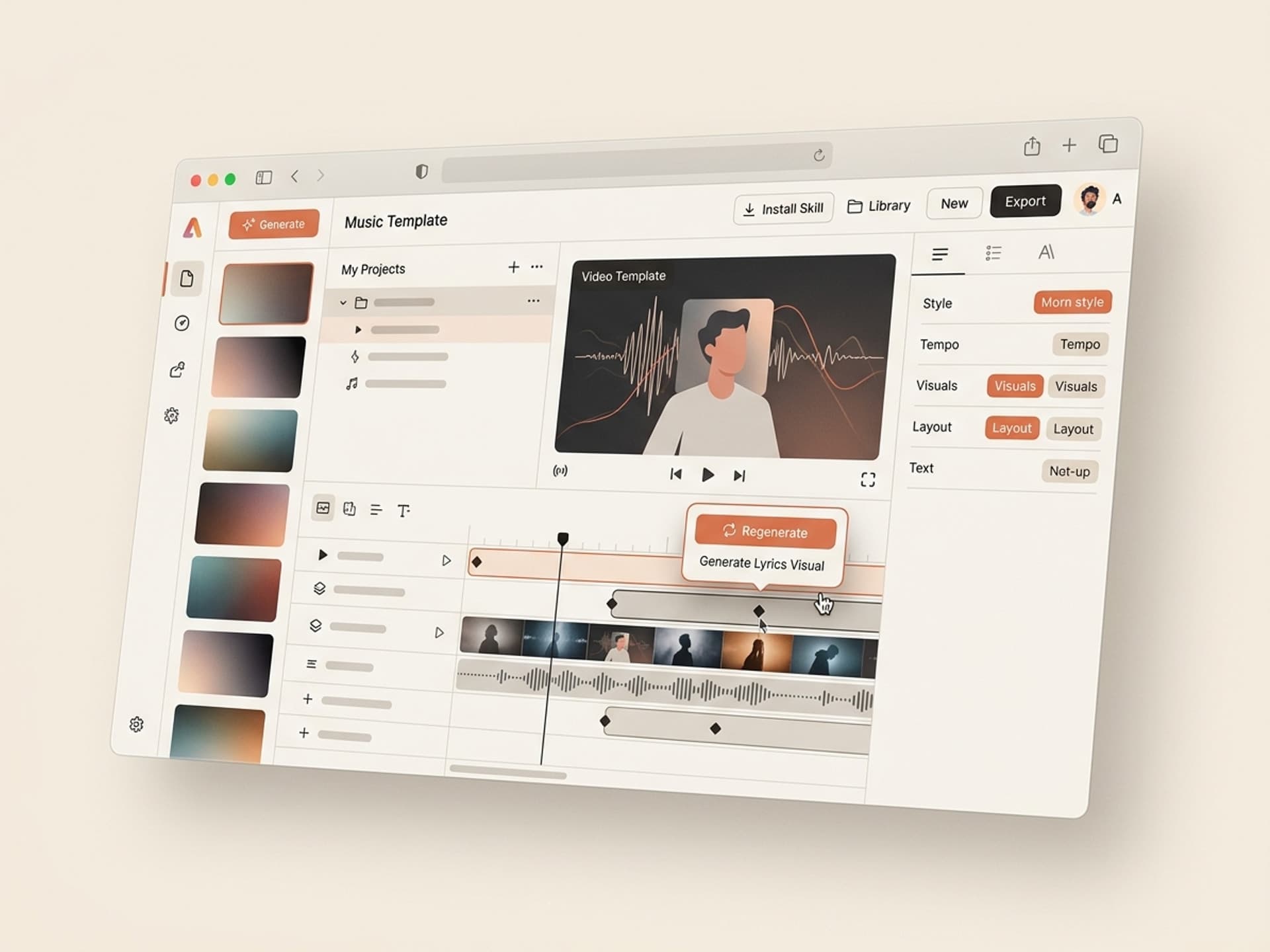
Why AI Cracked Music Video Production for Indies in 2026
The cost stack on a traditional music video is brutal. Director, DP, gaffer, grip, talent, location, color, edit, VFX. Even a "DIY" indie video shot on a friend's mirrorless ends up costing $1,500 to $3,000 once you pay everyone in food and gas. A label-grade narrative video sits at $25,000 to $80,000.
Three things changed in late 2025:
- Runway Gen-4 and Sora 2 can sustain character and scene consistency across 8 to 12 second clips, long enough to stitch into a full 3-minute video.
- Pika 2.2 added precise lipsync and beat-aware motion, which used to be the dealbreaker for AI music videos.
- ElevenLabs Sound Design v3 generates synchronized foley and ambient layers that match Suno or Udio music tracks beat-for-beat.
The result is a stack where one artist with a Vibe Skills subscription can ship a video that looked like a $20,000 production 18 months ago. The bottleneck is no longer rendering quality - it is workflow knowledge.
That is exactly what an AI skill packages: the workflow, the model orchestration, the brand and aesthetic rules, and the export presets. You drop in your track and your story, the skill handles the rest.
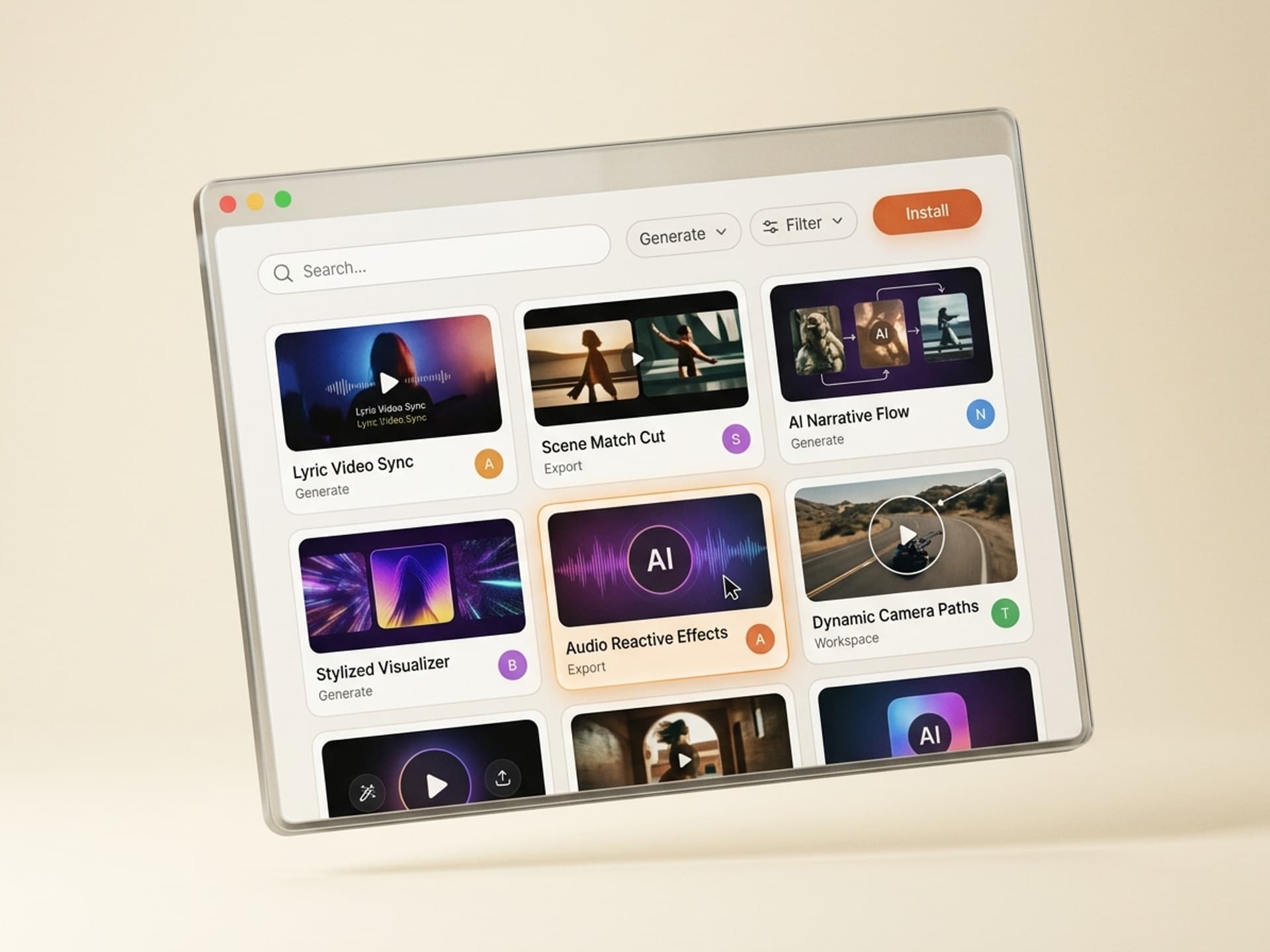
The 4 Music Video Formats Indie Artists Actually Ship
Not every track needs a Beyonce-tier narrative video. Indie artists who consistently grow on Spotify and YouTube ship a mix of these four formats per release.
| Format | When to use | Production time (AI skill) | Use case |
|---|---|---|---|
| Lyric video | Every single release | 30-45 minutes | YouTube SEO, Spotify Canvas-friendly, captions for muted autoplay |
| Visualizer | Album drops, EP cuts, deep tracks | 15-25 minutes | Spotify Canvas (8 second loop), TikTok background, Apple Motion artwork |
| Narrative video | Lead single, era-defining track | 4-8 hours | YouTube hero video, press coverage, festival sizzle |
| Performance edit | Live recordings, acoustic versions, behind-the-scenes | 1-2 hours | YouTube secondary content, fan engagement, algorithmic feed |
The smart release strategy is one narrative video per single, three to five lyric videos for every other track on the project, a visualizer per Spotify Canvas slot, and a steady stream of performance edits for YouTube Shorts and Reels. Doing that manually costs $30,000+ per album. With AI skills it fits inside a Pro subscription.
Browse video AI skills on Vibe Skills →
5 AI Music Video Skills on Vibe Skills
These five skills cover the indie music video stack end to end. Each one ships with style references, beat-detection presets, and export profiles for YouTube, Spotify Canvas, and short-form vertical.
1. Lyric Video Beat Sync
Generates a full lyric video from an audio file plus lyrics. Auto-transcribes if lyrics are not provided, beat-detects the track, then animates lyrics in sync with vocal phrases. Outputs in 16:9, 9:16, and 1:1 with brand color and font controls.
Best for: Every single release. The default lyric video should be running before the song hits DSPs.
2. Spotify Canvas Loop Generator
Builds an 8-second seamless loop tuned to Spotify's Canvas spec (9:16, 720x1280, under 8MB). Takes a single style reference image and a track section, then generates a loop that beat-matches and color-grades against the cover art. Ships 3 variants per run so the artist can A/B inside Spotify for Artists.
Best for: Every track on every release. Canvas drives a measurable lift in saves and playlist adds.
3. Narrative Music Video Director
Takes a song, a one-paragraph story brief, and a character reference, then storyboards a 3-minute narrative video as 18 to 24 shots. Generates each shot through Runway Gen-4 or Sora 2 with character consistency locked. Hands back a Premiere or DaVinci-ready bin with shots, transitions, and a beat-synced edit guide.
Best for: Lead singles and era-launchers where you want the YouTube hero asset to compete with majors.
4. Performance Visualizer
Turns a single performance photo or short clip into a stylized visualizer with reactive elements that pulse to the beat. Includes 12 visual style presets (analog VHS, anime, dreamcore, glitch, kinetic, vintage film, and more) so the same skill produces a consistent series across an album cycle.
Best for: Album cuts and deep catalog. Cheaper to ship than a narrative video, more compelling than a static cover image loop.
5. Live Session Cut Editor
Takes raw multi-camera footage from a live session (or a single phone clip) and edits a clean performance video in the artist's defined visual style. Auto-syncs cuts to musical phrases, applies color grade, lower thirds, and platform-specific export. Runs on lo-fi sources, so a iPhone-shot acoustic session becomes a publishable Tiny Desk-style clip.
Best for: YouTube secondary content, weekly artist-channel uploads, audience-building between releases.
| Skill | Best for | Browse |
|---|---|---|
| Lyric Video Beat Sync | Every single, lyric SEO | /category/video |
| Spotify Canvas Loop Generator | Every track, DSP visuals | /category/video |
| Narrative Music Video Director | Lead singles, hero videos | /category/video |
| Performance Visualizer | Album cuts, deep catalog | /category/video |
| Live Session Cut Editor | Performance content, fan engagement | /category/video |
Over 30 video skills per category. All included in a Vibe Skills subscription, starting at $39/month.
Ship a Music Video in a Weekend Workflow
Here is the exact playbook indie artists use to ship a release week's worth of video assets in a single weekend.
Step 1: Pick the right skill on Vibe Skills
Open the video category on Vibe Skills and install the four skills you need for a single release: Lyric Video Beat Sync, Spotify Canvas Loop Generator, Narrative Music Video Director, and Performance Visualizer. One subscription covers all of them.
Step 2: Define your visual world (30 minutes)
Build a one-page brand sheet with three style references, a color palette, font choices, and a one-line tone statement ("warm 90s analog film grain", "cyberpunk neon noir", "minimalist black-and-white kinetic"). Every skill accepts this as a single brand input, so your album-cycle visuals stay coherent across formats.
Step 3: Run the lyric video first (45 minutes)
Lyric video is your release-week safety net. Even if nothing else ships in time, the lyric video covers YouTube and gives you something to share. Drop in the audio, paste lyrics, hit run, export 16:9 for YouTube and 9:16 for TikTok and Reels.
Step 4: Generate Canvas loops for every track (Saturday afternoon)
If your release is a full project, batch-generate Spotify Canvas loops for every track. Each loop runs in 15-25 minutes. An 8-track EP wraps in under 4 hours. Upload directly through Spotify for Artists.
Step 5: Direct the narrative video (Saturday evening to Sunday morning)
For your lead single, run the Narrative Music Video Director. Write a one-paragraph story brief, attach your character reference photo, hit run. Review the storyboard, regenerate any shots that miss, then export the edit-ready bin.
Step 6: Polish the narrative cut in Premiere or DaVinci (Sunday afternoon)
Even with AI doing the heavy lifting, you want a 30 to 60 minute pass in your editor of choice to fine-tune cuts to the kick, color-grade for consistency, and add a final audio mix. The skill ships a pre-cut sequence, so this is polish, not assembly.
Step 7: Visualizers and performance edits during release week
After release, run Performance Visualizers for the deep cuts and the Live Session Cut Editor on any live or acoustic recordings you have. These become the rolling content for the four to six weeks after release that keeps the algorithm warm.
Total time: about 16 hours over a weekend. Total cost: a Vibe Skills Pro subscription at $39/month and your usual editor.
Start with the video category on Vibe Skills →
Frequently Asked Questions
Is there a copyright issue with AI-generated music video footage?
Most major AI video models (Runway, Sora, Pika) grant commercial use rights for content generated on a paid plan. The skills on Vibe Skills route through the model APIs you have rights to, so the output is yours to publish. The grey zone is style imitation - if you direct a skill to mimic a specific copyrighted music video shot-for-shot, you inherit that risk. Treat the skill like a director: bring original creative direction.
Spotify Canvas vs full music video - which matters more for indie growth?
Both, for different reasons. Canvas drives DSP performance (saves, playlist adds, repeat plays inside Spotify). A full music video drives YouTube discovery, press coverage, and social sharing. Canvas is non-negotiable because it lives next to every play. A full video is a campaign multiplier - it earns the press hits that get you on editorial playlists. Run Canvas on every track, run a full video on at least one track per release. Browse video skills on Vibe Skills to set up both.
Which music genres work best with AI music video skills?
Electronic, hyperpop, indie pop, lo-fi, ambient, and bedroom-pop genres ship the cleanest AI music video output today because their visual codes already lean abstract, surreal, and stylized. Hip-hop and R&B work great for visualizers and lyric videos but still benefit from human-shot performance footage in narrative formats. Folk and singer-songwriter genres work best with the Performance Visualizer and Live Session Cut Editor skills, where the human element stays front and center.
Can I keep a consistent character across a full music video?
Yes. The Narrative Music Video Director skill on Vibe Skills uses character reference locking, which feeds the same identity (face, hair, wardrobe, color palette) into every generated shot through Runway Gen-4 or Sora 2. You upload one reference photo at the start, and the skill enforces consistency across the 18 to 24 shots that make up a 3-minute video. You can also lock a secondary character if your video has two leads.
How long does it take to ship a full narrative music video?
A weekend. Pre-production (story brief, character reference, style sheet) runs about 90 minutes. Generation through the Narrative Music Video Director takes 2 to 4 hours of compute time, mostly running in the background. Editor polish in Premiere or DaVinci takes another 60 to 90 minutes. Total active time is roughly 4 to 6 hours, spread across a weekend. Compare that to the 6 to 12 weeks a traditional indie music video shoot takes from concept to delivery.
Does this replace hiring a music video director?
For most indie release cycles, yes. For era-defining campaigns where you need physical performance footage, choreography, or a specific physical location, a director still adds value. The pattern most artists settle into is using Vibe Skills for 80% of their release content (lyric videos, Canvas, performance visualizers) and saving budget for a director on the one or two narrative videos per album cycle that need a human creative lead. See the full video category for what you can ship without one.
Will AI music videos hurt my indie credibility with fans?
Not if the visuals match the music. Fans care about creative coherence, not provenance. The artists who get clowned for "AI slop" are the ones who ship generic, low-effort visualizers that have no relationship to the song. The artists who use AI thoughtfully (defined visual world, intentional aesthetic, consistent character work) are getting placed on editorial playlists and earning press coverage. AI is a production tool, like Ableton or DaVinci. Audiences judge the output, not the toolchain.
Stop Begging Friends to Direct Your Music Video for Free
Indie music in 2026 is a content-volume game. Spotify pays per stream, YouTube pays per view, TikTok pays per second of watched audio. The artists who win are the ones who release more, ship more visuals per release, and stay in the algorithmic feed long enough to compound. None of that is possible at $5,000 per video.
Vibe Skills puts the four music video formats indie artists need - lyric videos, Canvas loops, narrative videos, and performance edits - inside a single subscription. One weekend, one $39 plan, one full release week of video assets.
Browse music video AI skills on Vibe Skills →
Skip the $25,000 director quote. Install a music video AI skill on Vibe Skills and ship your release-week visuals this weekend.